New 2026 Darlingtonia Guidelines
- July 21, 2026
Quick Glance: Successfully growing Darlingtonia californica does not require ice cubes, refrigerated water, or elaborate root-cooling systems. Start with a climate where summer nights regularly cool into the 50s°F, then grow the plant in either live sphagnum moss or our granular mineral mix to reduce the risk of root rot. Give it full sun, plenty of water, a short wide container, and normal winter dormancy.
Can You Grow Darlingtonia in Your Climate?
Before choosing a pot, soil mix, or watering system, check your climate.
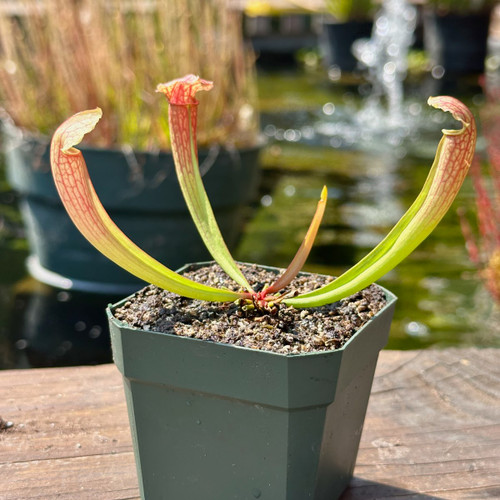
Darlingtonia is a hardy perennial native to the Oregon Coast and the mountains of Southern Oregon and Northern California. We consider it a mountain plant because one environmental condition is remarkably consistent across its natural range: cool summer nights.
For a practical starting point, look up the average nighttime temperatures in your area during July and August, the hottest part of the growing season.
| Average Summer Nights | Climate Fit | What We Would Expect |
|---|---|---|
| 50s°F (10–15°C) or colder | Best fit | These conditions most closely resemble the cool summer nights found throughout much of the plant's native range. |
| 60–69°F (16–20°C) | Gray zone | The plant may grow, but performance can become less predictable as average nighttime temperatures approach 70°F. |
| 70°F (21°C) or warmer | Poor fit | Consistently warm summer nights do not provide the nighttime cooling we associate with healthy long-term growth. |
These are practical guidelines for growing rather than rigid biological cutoffs. Weather fluctuates, and individual plants differ. What matters is the overall summer pattern.
Grower's Key Point
Cool nights and cool roots are not the same thing. We consider cool nights important for Darlingtonia's overall health. We have grown healthy plants with very warm daytime soil as long as the climate cools substantially at night.
For the reasoning behind this recommendation, read Darlingtonia and the "Cool Roots" Myth.
What Is the Best Growing Medium for Darlingtonia?
We currently recommend two very different growing media: live sphagnum moss or an inorganic granular mix.
Both have produced more consistent results for us than peat-based mixes.
Option 1: Live Sphagnum Moss
Growing Darlingtonia in live sphagnum closely resembles the conditions found in many coastal populations.
- Advantages: Live sphagnum holds large amounts of water while maintaining air around the roots. It also creates conditions that can suppress some microbial growth.
- Propagation: In our experience, plants growing in healthy live sphagnum produce abundant horizontal runners, or stolons.
- Watering: The moss must remain alive and continuously moist. During hot weather, frequent top watering may be necessary.
- Availability: True live sphagnum can be difficult to obtain and is slow to establish.
Don't Substitute Forest Moss: Moss collected from forests or sold simply as decorative "live moss" is not necessarily sphagnum. Forest moss grows under very different conditions and should not be treated as a substitute for live sphagnum bog moss.
Option 2: Granular Mineral Mix
Our second option was inspired by the mineral-rich soils associated with Darlingtonia populations in the Siskiyou Mountains.
The basic recipe is:
1 part vermiculite + 2 parts inert drainage material
The drainage portion can include pumice, perlite, Turface®, or a suitable combination.
At our nursery, our current recipe is:
1 part vermiculite + 1 part perlite + 1 part Turface®
You could also use 1 part vermiculite with 2 parts Turface, or return to the older formula we successfully used: 1 part vermiculite with 2 parts pumice.
We use perlite to reduce weight and Turface to add stability and keep the lightweight pots from tipping over.
Because this mix contains no peat or other decomposing organic potting material, it has given us particularly consistent results when managing Darlingtonia root rot.
Key Concept
The general principle of the mix is to provide a sterile and well-aerated environment for Darlingtonia's roots. Vermiculite alone will do that, but we include other ingredients for additional drainage and aeration. The drainage material simply needs to be inert. Pumice works just as well as perlite and Turface. As long as you think in terms of "inert drainage material", you can create a granular mix with what you have available.
Can You Combine the Granular Mix with Live Sphagnum?
We don't recommend it.
Vermiculite does not create suitable conditions for maintaining healthy live sphagnum over the long term. Choose one system or the other.
The vermiculite-containing mix is also not our standard medium for Sarracenia, Venus flytraps, or hardy sundews, so keep Darlingtonia grown in this mix in a separate water tray from those plants.
Should You Grow Darlingtonia in Peat Moss or Dried Sphagnum?
We no longer recommend either as our first choice for Darlingtonia.
That does not mean nobody can successfully grow the plant in peat. We grew a healthy colony in a peat-based mix for many years, and other growers have also had success.
The problem for us has been long-term consistency. Peat changes as it ages and decomposes, and our problems with unpredictable root rot were more frequent in older peat-based media.
Dried long-fiber sphagnum is also very different biologically from living sphagnum. Once the moss is dead, it no longer provides the same living bog environment.
Because live sphagnum and the granular mix have given us more dependable results, those are the two options we now recommend.
How Much Sun Does Darlingtonia Need?
Whenever possible, grow Darlingtonia in full outdoor sun, meaning approximately six or more hours of direct sunlight.
The plant can survive with roughly four hours of direct sun, but full sun generally produces stronger growth and more stolons.
Our mother plants grow outdoors in full sun without shade cloth or special protection during summer heat waves.
Sunlight and heat are different variables. If a plant declines in full sun, don't automatically conclude that the sunlight itself is the problem. Check the climate, water supply, and especially root health.
How Should You Water Darlingtonia?
Keep the growing medium continuously moist during active growth. Both live sphagnum and the granular mix can dry quickly in hot weather, so we grow our plants in shallow trays of water.
Keep the water level below roughly the halfway point of the container rather than submerging most of the pot.
What Kind of Water Can You Use?
In our experience, Darlingtonia grown in mineral media can tolerate somewhat more dissolved minerals than many other carnivorous plants. We have grown them successfully with water measuring around 150 ppm.
However, live sphagnum is considerably less tolerant of mineral buildup. When maintaining live moss, we recommend low-mineral water—ideally around 50 ppm or lower.
If you already use rainwater, distilled water, or reverse-osmosis water for your other carnivorous plants, you can simply continue using it for Darlingtonia.
Empty the Water Tray Periodically
Every few weeks, empty the tray completely rather than continually topping it off. Then top-water the pot thoroughly and allow the fresh drainage to refill the tray.
This helps remove accumulated contaminants instead of allowing them to remain indefinitely in standing water.
What Kind of Pot Is Best for Darlingtonia?
Think wide rather than deep.
Darlingtonia develops a relatively shallow root system and spreads horizontally through stolons just beneath the surface. A short propagation tray or broad container therefore provides more useful growing space than a very deep narrow pot.
Ordinary nursery pots still work. You don't need a specialized container to grow the plant successfully.
We do recommend giving each pot or small colony its own water tray whenever practical. If root disease appears in one container, separate trays reduce the opportunity for contaminated water to reach your entire collection.
Does Darlingtonia Need Winter Dormancy?
Yes. Darlingtonia is a temperate perennial and should experience a normal winter dormancy.
Growth gradually slows in autumn. After repeated frosts, the plant becomes dormant, and older pitchers often develop brown patches, spotting, or other cold damage. This is normal seasonal aging.
Plants at our nursery routinely tolerate overnight temperatures around 20°F (-7°C). In climates with more prolonged or severe freezing, provide additional protection from extreme frost exposure.
Be Patient in Spring
Darlingtonia often wakes considerably later than Venus flytraps and Sarracenia.
Don't assume a dormant plant is dead simply because your other carnivorous perennials have already begun growing. It can remain quiet for several additional weeks before producing its first new pitchers.
Frequently Asked Questions About Growing Darlingtonia
Does Darlingtonia need cold water or ice cubes?
No special root-cooling system is part of our current growing method. We focus instead on a climate with cool summer nights, healthy growing media, adequate water, and good root health.
Can Darlingtonia grow in full sun?
Yes. We grow our mother plants in full outdoor sun. Approximately six or more hours of direct sun generally produces stronger growth and encourages stolon production.
What is the best soil for Darlingtonia?
Our two preferred options are living sphagnum moss or a granular mineral mix. Our nursery granular mix contains equal parts vermiculite, perlite, and Turface.
Can I grow Darlingtonia in peat moss?
Some growers do so successfully, and we did for many years. However, our results became less consistent as peat-based media aged. Live sphagnum and granular media have produced more predictable long-term results for us.
Why is my Darlingtonia wilting?
A still-green pitcher that suddenly becomes limp can indicate that the root system or stolon is no longer supplying enough water. Root rot is one important possibility. Isolate the plant and inspect the roots rather than assuming the plant simply became too hot.
When does Darlingtonia come out of dormancy?
Usually later than Sarracenia and Venus flytraps. It is normal for a healthy Darlingtonia to remain dormant several weeks after those plants have begun their spring growth.
Learn more about Darlingtonia:
• Darlingtonia and the "Cool Roots" Myth
• Saving a Dying Darlingtonia: A Root Rot Rescue Guide
• How to Grow Darlingtonia — Written Care Guide and PDF

![Soil, Peat/Perlite Mix [Gallon Bag]](https://cdn11.bigcommerce.com/s-4kt71d4v98/images/stencil/500x500/products/120/2084/Soil-60__12201.1664306082.jpg?c=1 "Soil, Peat/Perlite Mix [Gallon Bag]")



![Soil, Tropical Pitcher Plant Mix [Gallon Bag]](https://cdn11.bigcommerce.com/s-4kt71d4v98/images/stencil/500x500/products/121/3209/Soil-2__11156.1776819725.jpg?c=1 "Soil, Tropical Pitcher Plant Mix [Gallon Bag]")