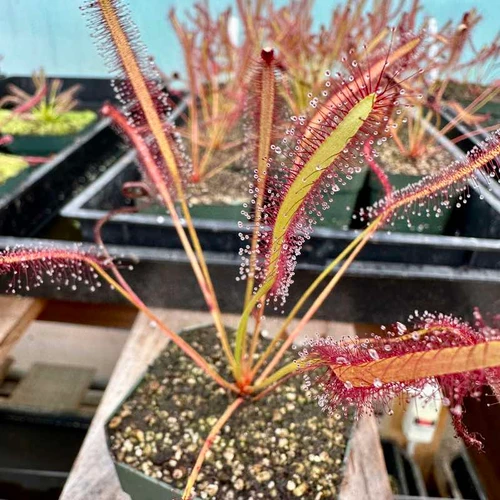
Q/A #163 - Darlingtonia and the Cool Roots Myth
- July 14, 2026
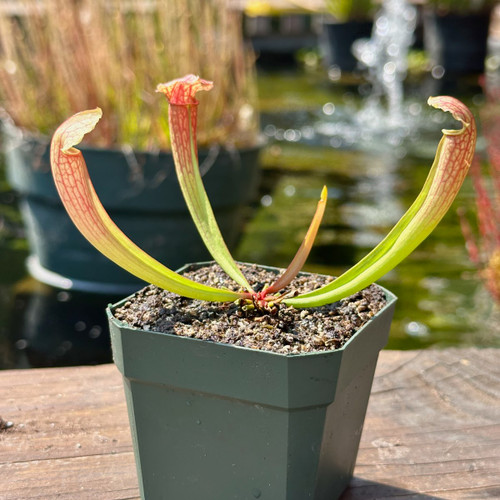
Quick Glance: Darlingtonia californica does not appear to die simply because its roots get warm. In the wild and at our nursery, healthy plants have tolerated summer soil temperatures in the 80s°F and higher. What matters more is cool summer nights, which support the plant's health as a mountain species, and managing root-rotting soil pathogens. Keeping the roots cool may slow pathogen activity, but it does not address the underlying problem when a plant is already infected.
Do Darlingtonia Roots Need to Stay Cool?
Based on what we've observed over 30 years, not necessarily.
The long-standing advice for growing Darlingtonia, also known as the Cobra Lily or Cobra Plant, has been to keep its roots continuously cool. Growers have used Styrofoam pots, ice cubes, refrigerated water, drip systems, and other methods to prevent the root zone from warming during summer.
We once followed similar advice. But after observing wild populations, experimenting with plants at our nursery, and investigating a severe die-off in our own collection, we no longer believe that warm roots alone explain why Darlingtonia suddenly wilts and dies.
Grower's Key Point
The distinction is between cool nights and cool roots. We consider cool summer nights important for the overall health of Darlingtonia. We have not found similarly consistent evidence that its roots must remain cool during the day.
Why Did the Cool-Roots Idea Become So Popular?
The idea makes sense when you look at Darlingtonia in its native habitat.
Along the Oregon Coast, plants grow in wet sphagnum bogs under a mild maritime climate. In the mountains of Southern Oregon and Northern California, plants often grow where water moves through mineral-rich soils. Measuring the water or soil in these habitats can easily produce cool temperatures.
It is therefore tempting to conclude that the roots themselves require those temperatures.
But that explanation becomes less convincing when we compare coastal plants, mountain plants, and plants grown in cultivation.
What Do Wild Darlingtonia Habitats Tell Us?
Coastal Populations
Along the Oregon Coast, Darlingtonia commonly grows in large, open wetlands containing live sphagnum moss. Summers are relatively mild, and nighttime temperatures remain cool.
The well-known Darlingtonia Wayside near Florence, Oregon, is easy to visit, but we don't consider its increasingly shaded conditions representative of the larger open coastal populations we've studied.
Mountain Populations
Many Darlingtonia populations occur in the Siskiyou Mountains of Southern Oregon and Northern California. These habitats are very different from the coast.
The plants can grow in open wetlands associated with serpentine-derived soils. Summers are substantially hotter and drier, with daytime temperatures commonly reaching the 80s and 90s°F and occasionally exceeding 100°F.
Plants in Cultivation
At our nursery near Eagle Creek, Oregon, summer conditions more closely resemble the inland mountain climate than the Oregon Coast. We have grown Darlingtonia through numerous heat waves while experimenting with different containers, watering systems, and growing media.
We have also sold thousands of plants to growers throughout the United States. Their successes and failures gave us an additional way to compare the climate with growing methods.
Across all three groups, one environmental factor repeatedly stood out: cool summer nights.
Why Are Cool Summer Nights Important for Darlingtonia?
We consider Darlingtonia a mountain plant, including populations that occur near sea level along the Oregon Coast.
Throughout much of its native range, nighttime temperatures during July and August commonly fall into the 50s°F. The same pattern occurs at our nursery. Even after very hot summer days, nighttime temperatures usually fall substantially.
Plants adapted to mountain climates function differently from plants adapted to continuously warm lowland environments. A substantial nighttime temperature drop allows metabolic activity to slow and gives the plant a period of recovery after the daytime growing cycle.
When nights remain warm for extended periods, a mountain plant may continue using stored energy when it cannot replenish that energy through daytime photosynthesis. Over time, the plant can become increasingly stressed and more vulnerable to disease.
This helps explain a pattern we've repeatedly seen among growers: Darlingtonia tends to perform best in climates where summer nights regularly cool into the 50s°F.
How Much Daytime Soil Heat Can Darlingtonia Tolerate?
We don't know a precise maximum soil temperature for Darlingtonia, and we don't recommend treating any particular temperature as a biological cutoff.
What we can say is that we've seen healthy plants tolerate considerably warmer roots than traditional advice would suggest.
During a 2009 visit to populations in the Siskiyou Mountains, daytime air temperatures reached approximately 108°F during a heat wave. We measured soil temperatures in the 80s°F at some sites. Those populations continued growing and remain established.
We've recorded similar conditions at our nursery. During heat waves, our mother plants have experienced soil temperatures in the 80s°F without special root-cooling systems.
In one intentionally extreme example, a potted coastal-form Darlingtonia growing in full sun experienced soil temperatures of approximately 105–107°F (41°-42°C) while the shade temperature was 104°F. The plant survived and continued growing.
One plant does not establish a universal heat-tolerance threshold. But observations like this are difficult to reconcile with the claim that Darlingtonia roots simply die when they exceed 70°F (21°C)
If Warm Roots Don't Kill Darlingtonia, Why Do Plants Suddenly Wilt?
This was the question that changed how we grow the plant.
Beginning around 2010, our mother colony that had grown successfully for roughly 15 years began declining. Over several growing seasons, we ultimately lost more than 90% of those plants.
The pattern was inconsistent. Some plants suddenly wilted and died while neighboring plants remained healthy under the same temperatures and growing conditions.
That inconsistency made us suspect disease rather than heat alone.
In 2015, we submitted affected plants to Oregon State University for testing. The samples contained root-rotting soil pathogens including Cylindrocarpon and Pythium.
This provided the missing piece.
Many root-rotting pathogens become considerably more active under warm, wet conditions. A summer heat wave can therefore coincide with sudden plant collapse, creating the appearance that hot roots killed the plant.
Cooling the root zone may slow pathogen activity and delay the symptoms. But if a pathogen is already present, cooling does not eliminate the infection.
Our Conclusion:
We have not observed consistent evidence that high daytime soil temperature alone causes sudden Darlingtonia death. When a plant unexpectedly wilts during hot weather, we now consider root health and soil pathogens rather than assuming the roots simply overheated.
You can read the laboratory findings here: OSU Pathogen Report.
How Can Growing Media Reduce the Risk of Root Rot?
Once we began thinking in terms of soil health rather than soil temperature, we reconsidered the media we were using.
Two approaches have produced our most consistent results: live sphagnum moss and an inorganic granular mix.
Live Sphagnum Moss
Many coastal Darlingtonia populations grow directly through living sphagnum moss. Live sphagnum maintains a wet but aerated root environment and possesses properties that can suppress some microbial growth.
After moving mother plants into live sphagnum, our root-rot problems declined substantially once the moss became established.
Granular Mineral Mix
Our other approach was inspired by the mineral soils of the Siskiyou Mountains.
We now use a mix containing vermiculite, perlite, and Turface®. It contains no peat or other decomposing organic potting material and has given us particularly consistent results when salvaging plants with suspected root rot.
For the exact recipe and complete growing instructions, see our New 2026 Darlingtonia Care Guide.
Why We No Longer Rely on Peat Moss
We successfully grew Darlingtonia in peat-based media for many years, so we don't claim that peat automatically kills the plant. Some growers continue to have excellent results with it.
Our concern is consistency over time. As peat ages and decomposes, its physical and biological properties change. In our collection, older peat-based media were associated with more unpredictable die-off and required regular replacement.
Live sphagnum and the granular mix have simply produced more dependable long-term results for us, so we no longer use peat-based media for our Darlingtonia.
Frequently Asked Questions About Darlingtonia and Root Temperature
Do Darlingtonia need ice cubes on their soil?
We don't recommend ice cubes as a normal requirement. Healthy Darlingtonia at our nursery routinely experience warm summer soil without ice, refrigeration, or other artificial root-cooling methods.
Will hot soil kill a Darlingtonia?
We have not found a consistent soil-temperature threshold at which healthy Darlingtonia suddenly dies. We've observed healthy plants with soil temperatures in the 80s°F and, in one extreme nursery example, above 105°F. That does not mean heat is irrelevant: hot conditions can increase plant stress and can also favor root-rotting pathogens.
What temperature matters most for Darlingtonia?
For climate suitability, we pay particular attention to summer nighttime temperatures. Darlingtonia performs best for us where nights during the hottest part of summer commonly fall into the 50s°F.
Why did my Darlingtonia suddenly wilt during a heat wave?
Sudden wilting can indicate that the roots or stolons are no longer supplying enough water to the pitchers. Root rot is one possibility, particularly when a green pitcher suddenly becomes limp while other leaves remain firm. Do not assume heat alone is the cause.
Are mountain Darlingtonia more heat-tolerant than coastal Darlingtonia?
We once believed they were. After growing both forms in live sphagnum and granular media, however, we have not observed a meaningful difference in their ability to tolerate daytime heat. The coastal plant we exposed to soil temperatures above 105°F survived and continued growing.
Continue the Darlingtonia series:
• New 2026 Darlingtonia Care Guide
• Saving a Dying Darlingtonia: A Root Rot Rescue Guide
Additional resources:
• How to Grow Darlingtonia — Written Care Guide and PDF
• Serpent of the Siskiyous
• OSU Pathogen Report


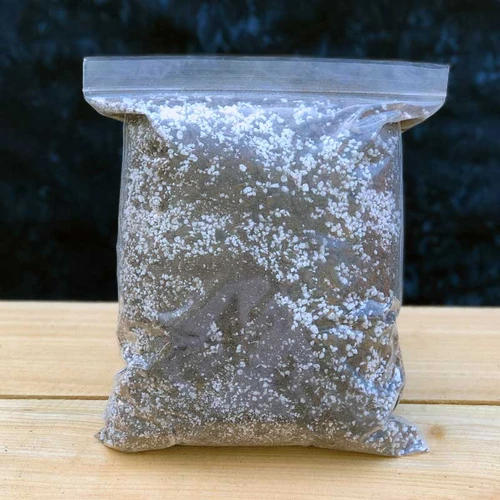
![Soil, Peat/Perlite Mix [Gallon Bag]](https://cdn11.bigcommerce.com/s-4kt71d4v98/images/stencil/500x500/products/120/2084/Soil-60__12201.1664306082.jpg?c=1 "Soil, Peat/Perlite Mix [Gallon Bag]")



![Soil, Tropical Pitcher Plant Mix [Gallon Bag]](https://cdn11.bigcommerce.com/s-4kt71d4v98/images/stencil/500x500/products/121/3209/Soil-2__11156.1776819725.jpg?c=1 "Soil, Tropical Pitcher Plant Mix [Gallon Bag]")