How to Grow Venus Flytraps

No terrariums.  No myths.  No nonsense.
Practical advice based on decades of growing and propagating carnivorous plants.

Grow Venus Flytraps!

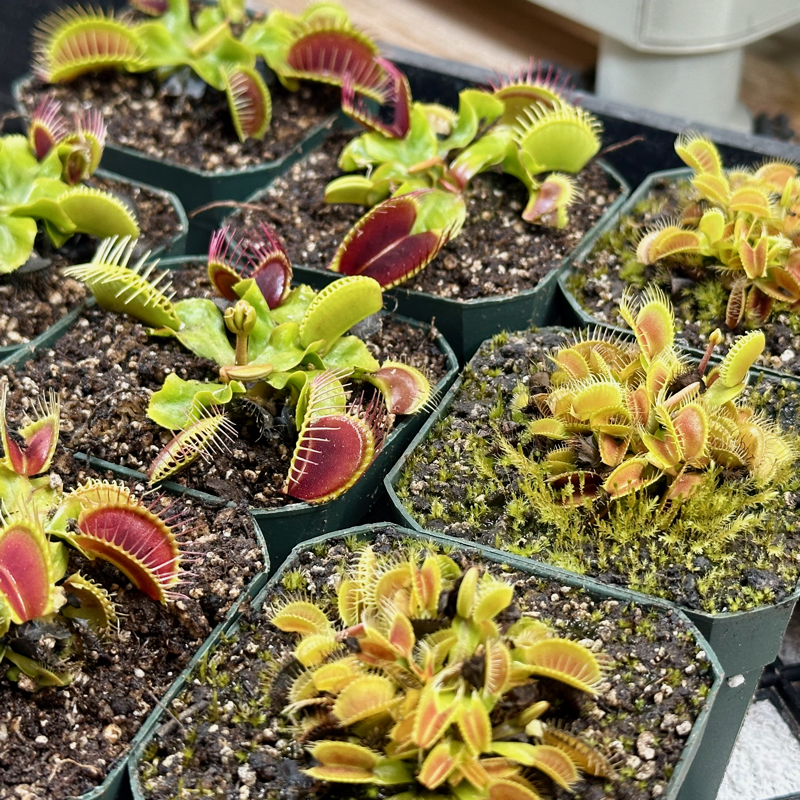
The Venus flytrap, Dionaea muscipula, with its distinctive mouth-like leaves, is the most iconic of all carnivorous plants and one of the most recognizable plants in the world. Thanks to its popularity in cultivation, many different varieties of this monospecies are now available in a fantastic array of sizes, shapes, and colors.

Dente Flytrap - bred for its short, spiky teeth.

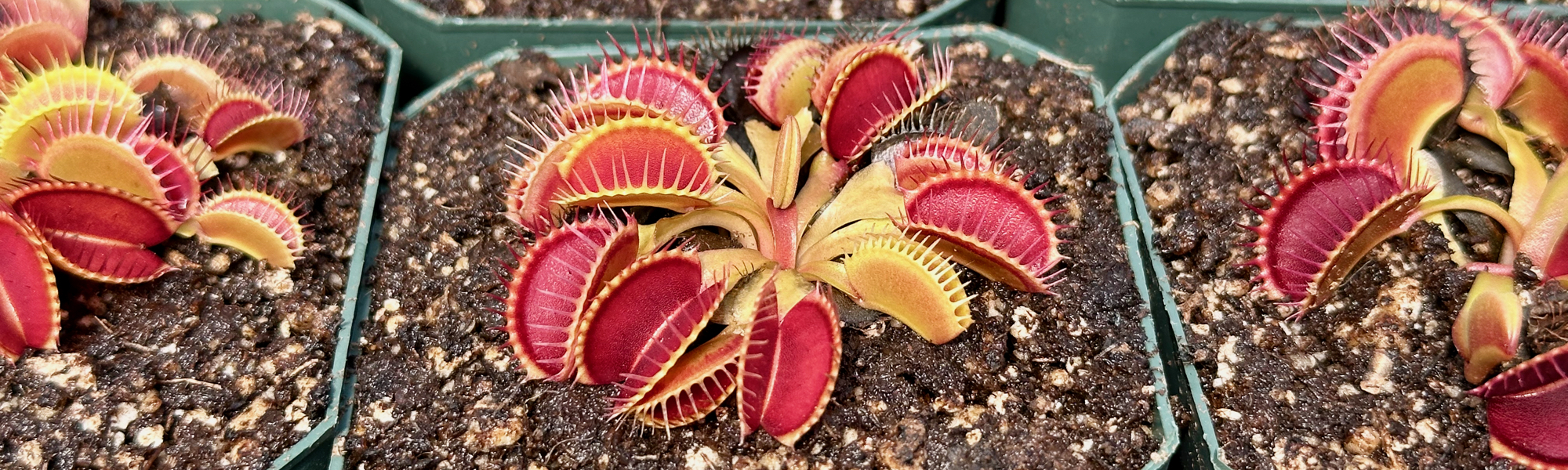
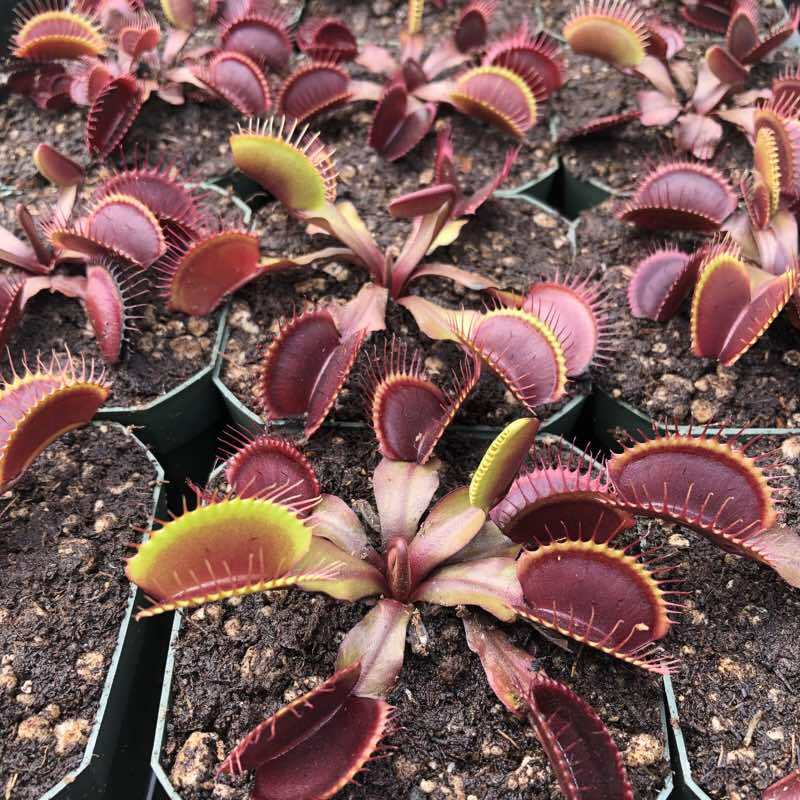
Red Dragon Flytrap - bred for color.

Big Mouth Flytrap (left) - bred for size and vigor.

Venus Flytrap Care at a Glance

Growing Requirement Our Recommendation
Where to Grow Outdoors year-round, where plants can receive strong sunlight and experience natural seasonal changes in temperature and day length.
Sunlight Full sun with 6 or more hours of direct sunlight each day. A minimum of 4 hours is acceptable if the plant receives bright light for the rest of the day.
Water Use rainwater, distilled water, reverse-osmosis water, or tap water below 50 ppm. Keep the soil wet throughout the year, including during winter dormancy.
Soil Use 1 part sphagnum peat moss to 1 part perlite. Do not use conventional potting soil, compost, or fertilizer.
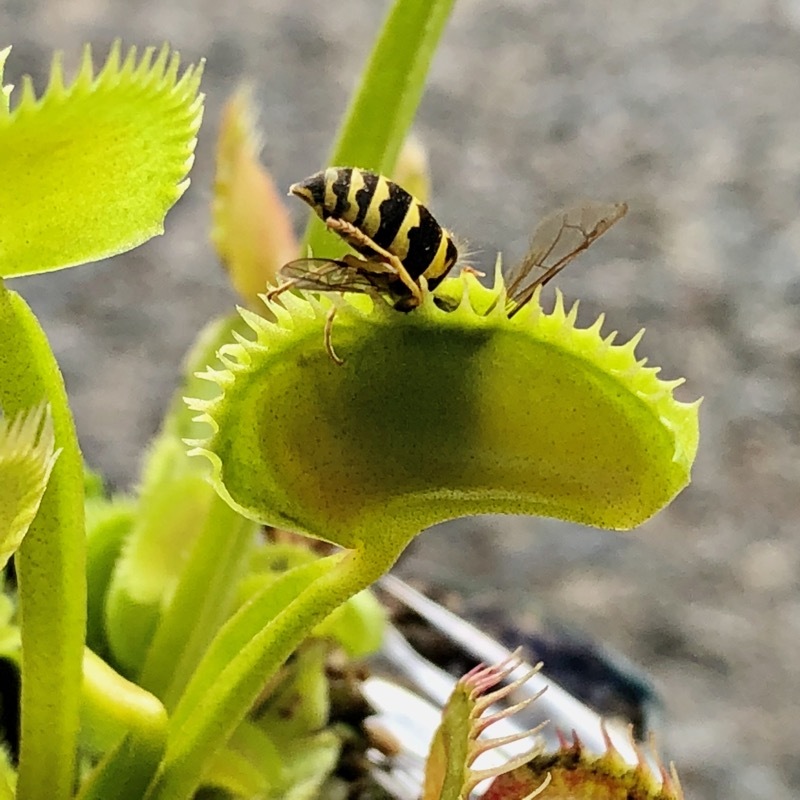
Feeding No hand-feeding is necessary when grown outdoors. Venus flytraps naturally catch insects during the growing season.
Winter Dormancy Required each winter. Keep the soil moist and provide additional protection during prolonged or severe freezes when necessary.

Grower's Key Point

Venus flytraps are outdoor temperate perennials, not tropical houseplants. Give them abundant direct sunlight during the growing season and allow them to experience the natural seasonal changes that trigger winter dormancy.

Want a printable quick reference?
Download our one-page Venus Flytrap Care Guide (PDF)


Where do Venus flytraps grow naturally?

The Venus flytrap is a cold-hardy perennial native to a small region surrounding Wilmington, North Carolina, where it grows in sunny, wet coastal savannas. Summers there are hot and humid, while winter can bring freezing temperatures and occasional snow.

Like other temperate perennials, Venus flytraps follow a seasonal growth cycle. They grow vigorously through spring and summer, slow down in fall, go dormant during winter, and resume active growth in spring.

Should you grow a Venus flytrap indoors or outdoors?

Venus flytraps grow best outdoors as container or potted plants, where they can receive the strong sunlight and seasonal temperature changes they need for healthy long-term growth.

They tolerate summer heat very well and can be grown successfully even in hot climates, provided they receive adequate water. You may also grow a Venus flytrap in a pond or fountain, but do not submerge the plant. Keep the water level below halfway up the pot.

Because Venus flytraps require nutrient-poor, acidic soil, avoid planting them directly in ordinary garden soil.

How much sunlight does a Venus flytrap need?

Your Venus flytrap requires full sun for its strongest growth. Aim for 6 or more hours of unobstructed, direct sunlight during the growing season.

If full sun is not possible, your plant can maintain adequate growth with 4–6 hours of direct sunlight. However, it will generally be less robust and colorful than a plant grown in full sun.

A good rule of thumb is to give a Venus flytrap the same amount of sunlight you would give a tomato plant. When in doubt, give it more sun.

What kind of water should you use for a Venus flytrap?

Venus flytraps require water that is low in dissolved minerals. If your tap water contains less than 50 parts per million (ppm) of dissolved minerals, you can safely use it. Otherwise, use rainwater, distilled water, deionized water, or water filtered through a reverse-osmosis system.

Keep the soil wet at all times, including during winter dormancy. The easiest method is to place the pot in a shallow tray containing about 1–2 inches of water.

Keep the water level below halfway up the pot rather than submerging the growing medium.

What is the best soil for a Venus flytrap?

Use a mixture of equal parts sphagnum peat moss and perlite. The ingredients should contain no added fertilizer.

Never use regular potting soil, compost, manure, or fertilizer. Venus flytraps are adapted to extremely nutrient-poor soils, and these products can severely damage or kill the plant.

Don't want to mix your own?
Our blend is ideal for Sarracenia, Venus flytraps, and hardy sundews.

Do you need to feed a Venus flytrap?

Venus flytraps grown outdoors do not need to be hand-fed. They naturally catch insects throughout the growing season and obtain all the supplemental nutrients they need from their prey. Always remember that giving your plant sunlight is much more important than feeding them.

If you want to feed your plant, feed only appropriately sized insects. Organic and non-GMO would be ideal. Never feed your plant meat, hamburger, cheese, or other human food, and never apply fertilizer to the soil.

Do Venus flytraps need winter dormancy?

Venus flytraps are temperate perennials and require a winter dormancy each year. As temperatures cool and days shorten in fall, growth will slow and some traps will gradually turn black and die back. This is a normal part of the plant's seasonal growth cycle.

During dormancy, keep your Venus flytrap outdoors whenever your climate permits. The plants tolerate frost and freezing temperatures, and the soil may freeze during cold weather. Keep the soil moist throughout winter, but it does not need to remain as wet as during the growing season.

Container-grown plants may require protection during prolonged or severe freezes. The primary concern is not simply freezing, but dehydration from cold, drying winds and repeated cycles of freezing and thawing. The amount of protection needed will depend on your winter climate.

At our nursery in Oregon, our flytraps are well-accustomed to hot dry summers.
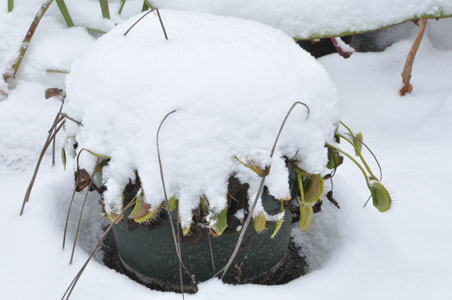
In winter, flytraps are dormant!
The Venus Flytrap is a cold-hardy perennial. We grow them outdoors at our nursery in USDA zone 8.

Seasonal Care

Growing Venus flytraps through the seasons? Our Monthly Care Guide explain what to expect throughout the year, from spring growth and summer care to fall preparation and winter dormancy.

Venus Flytrap Troubleshooting

Why does my Venus flytrap look weak or unhealthy?

Weak, misshapen, or poorly developed traps are often a sign that the plant is not receiving enough direct sunlight. Venus flytraps grow best outdoors in full sun, with at least 6 hours of direct sunlight on a sunny day.

Also check the basics: use mineral-free water, keep the soil wet, and make sure the plant is growing in an appropriate peat-and-perlite mix without fertilizer.

Read a real example: Venus Flytrap Is Looking Strange →

Can I grow my Venus flytrap indoors?

We recommend growing Venus flytraps outdoors. They are temperate perennials that need strong direct sunlight during the growing season and natural seasonal changes to trigger winter dormancy.

Windowsills, terrariums, and other indoor locations frequently provide too little light for strong long-term growth. Think of a Venus flytrap more like an outdoor strawberry plant than a tropical houseplant.

Read a real example: Red Dragon Flytrap Dying on a Windowsill →

My Venus flytrap looks like it is dying in winter. Is this normal?

Usually, yes. As Venus flytraps enter winter dormancy, growth slows and many traps turn black and die back. Some varieties may lose most of their visible leaves during winter.

Continue to keep the soil moist throughout dormancy. The plant is using much less water than during summer, but the soil should never be allowed to dry completely.

Learn more: Should Venus Flytrap Trays Be Dry in Winter? →

Avoid the Most Common Mistakes

Most Venus flytrap problems come down to a handful of basic growing mistakes. Learn the 5 common mistakes we see growers make with Venus flytraps →


Ready to grow a Venus Flytrap?


• Shipped potted with a 30-Day Guarantee.
• Inventory changes monthly and seasonally.
Brows our current Flytrap inventory.

Your cart is empty

Most Popular