Q/A #149 - Should Venus Flytrap Trays Be Dry in Winter?
- October 12, 2024
Hi, I’m Jacob Farin, one of the growers here at Sarracenia Northwest. In 2005, we started a free service answering questions from carnivorous plant growers all over the world. Since then, we’ve answered thousands of questions and have seen plants grown in many different situations. One grower recently wrote to us.
“I have 9 pots of Venus flytraps and 1 pitcher plant, a Sarracenia purpurea. I live along the East Coast in USDA zone 8a, and have had these plants for 3 years. I grow them in partial sunlight and use a mix of 1/3 peat moss, 1/3 perlite, and 1/3 sand. During the spring and summer, they sit in about 1-2" of rain water in a saucer. In the winter I don't leave them in water because it rains and the air outside doesn't get dry very much. Near the end of the winter, I noticed some of the plants were shedding their dormant traps very easily, so I opened them apart and turns out the plants had root rot. I saved what I could and what I saved have produced a large amount of small traps instead of growing bigger traps. I'm not sure how they developed root rot since they were not even sitting in water all winter.”
The grower also included a photo of his setup. From his photo, I can see his plants have a top dressing of pea gravel. Pea gravel is very useful to prevent soil erosion during heavy rain, which is common along the East Coast in summer.
So, this grower’s main concern is root rot on his flytraps. But, there is actually a different issue involved. Based on his description and photo, a couple of things came to mind. First was lighting. His plants really should get full sun during the growing season. And we define full sun as 6 or more hours of direct sunlight. Full sun will ensure that plants are at their optimal health when winter comes. The plants in his photo aren’t as vibrantly colored as they could be. For instance, the Sarracenia purpurea should be red. I don’t see any red in that plant.
Now, he didn’t indicate the variety of his flytraps. But, by their appearance, I’m assuming they’re a typical variety that most nurseries carry. For most first-time growers, his flytraps might look like they’re getting lots of sunlight. However, when properly grown, they should have a subtle hue of yellow. The insides of the traps should also have some redness. The flytraps in his photos, however, are dark green and lack yellow hue. And the insides of the traps are also green with no red.
Now, Venus flytraps grow okay in partial sunlight. Not great. Just okay. And because this grower thinks that root rot is a possibility, I told him that he should consider giving his plants more sunlight during the growing season. And the purpose for this is to ensure that his plants are as healthy as possible before the onset of winter. But, my primary concern isn’t root rot, nor is it the sunlight. It’s actually frost damage from underwatering. Now remember, he mentioned that near the end of winter, his flytraps “were shedding dormant traps very easily.” And when he unpotted his plants, he discovered what appeared to be root rot. He saved what he could, but his plants produced small traps instead of growing bigger traps.
He then ended with, “I'm not sure how they developed root rot since they were not even sitting in water all winter.”
This was a very important clue for me because root rot is much more insidious. Root rot can happen from fungal or bacterial infection, and I wish he had a photo of the damage of his plants, but I just have to go by his description and photo. I know from experience that root rot during winter time is very quick and without mercy. It will kill the entire plant. Not just part of it. The entire plant. So, is it possible that his plants could have been affected by root rot. Yes, it’s possible. Is it probable? Based on my experience, no. The likely cause of what he’s seeing in his plants, lots of small traps in spring time, is from frost damage. And the frost damage will affect the outer portions of the flytrap bulb. This is why the large dormant traps died off quickly and the plant grew much smaller traps instead. So, having small traps in spring is consistent with a bulb shrinking from frost damage.
Now, having grown thousands of Venus flytraps over the course of my career as a nursery owner, I know from experience that flytraps can withstand freezing temperatures during dormancy. We’ve seen that happen over and over every year. So, the question is “why was there frost damage?” Frost damage will occur if there isn’t sufficient insulation around the bulb of the flytrap. And this brings us to water level and soil.
Some growers think that their flytraps shouldn’t be kept in water during winter time and that the soil should be on the drier side. We don’t advocate that at all. We never mention decreasing water levels during winter in any of our literature or in our monthly care videos. It's essential to keep the soil moist at all times, even in winter. The water level doesn't have to be as high as it was during the summer months, but flytraps should still sit in some water during winter. If you watch our monthly care videos, we always show water in the trays during winter. Always. As long as the water level is below the halfway mark of the pot, you won’t need to worry about root rot.
Now, water has a great insulating effect, and it prevents sudden changes happening to the flytrap bulb. If you keep the soil on the dry side and the top layer of the soil dries out, your plants can't rely on water for insulation. You also risk killing the plants from freeze-drying. Freeze-drying occurs when plants lose moisture in their tissues during extended freezes. If the plant isn't optimally hydrated before the freeze, it may die during the freeze. This is why we recommend keeping the soil wet at all times, even during winter dormancy.
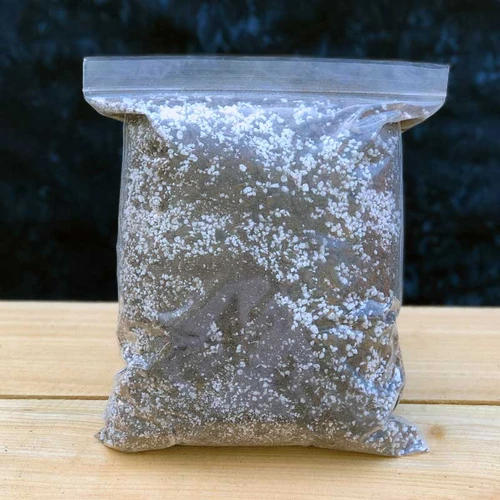
This grower was also using a very coarse mix of equal parts peat moss, perlite, and sand. A coarse soil mix like this will hold less moisture, which actually increases the need for the flytraps to sit in water to prevent the soil from drying out. We recommend a mix of 50% peat moss and 50% perlite. We use this mix on all of our flytraps. It holds sufficient moisture while providing proper drainage and aeration. Even with the wet winters in the Pacific Northwest, we haven’t seen the need for a coarse mix, and we almost never see root rot with our flytraps.
Other winter issues may be involved, such as moving plants down from an elevated position to the ground to minimize temperature fluctuations. Freezing wind is also an issue in winter, so covering plants during those extended freezes is also important. But based on what the grower shared, my primary concern wasn’t root rot. It’s frost damage from underwatering. This can be minimized by maintaining an inch of water in the tray and using sufficient peat moss to maintain soil moisture. It's also best to give flytraps full sun to ensure that they’re at peak health when winter arrives. As far as sunlight is concerned, when in doubt, provide more sunlight.
Now if you need help with your Venus flytrap or other carnivorous plant, we’re here for you. Visit our website, growcarnivorousplants.com, and look for the “Ask the Growers” link. And while you’re on our website, we have tons of information about growing carnivorous plants. And checkout the outdoor perennials that we have in stock, such as Sarracenia and Venus flytraps. All outdoor perennials are acclimated for outdoor growing. Thank you so much for watching. I look forward to seeing you in another video.
• The original question and response have been edited for publication.
• Click on a hashtag below or use the site's search function to view similar topics.
• To submit a carnivorous plant question, visit Ask the Growers.


![Soil, Peat/Perlite Mix [Gallon Bag]](https://cdn11.bigcommerce.com/s-4kt71d4v98/images/stencil/500x500/products/120/2084/Soil-60__12201.1664306082.jpg?c=1 "Soil, Peat/Perlite Mix [Gallon Bag]")



![Soil, Tropical Pitcher Plant Mix [Gallon Bag]](https://cdn11.bigcommerce.com/s-4kt71d4v98/images/stencil/500x500/products/121/3209/Soil-2__11156.1776819725.jpg?c=1 "Soil, Tropical Pitcher Plant Mix [Gallon Bag]")