Q/A #160 - Do Nepenthes Need High Humidity? The Humidity Myth, Part 1
- November 15, 2025
Quick Glance: Most commonly grown Nepenthes do not need constant high humidity to produce pitchers. In our experience, adequate light and suitable temperatures are more important drivers of pitcher development. Higher humidity can make pitchers larger, but many common Nepenthes acclimate well to normal household humidity.
How Much Humidity Do Nepenthes Actually Need?
Most commonly available Nepenthes do not require a specific humidity percentage and can acclimate to the normal fluctuations in household humidity. A terrarium, humidity dome, or humidifier is unnecessary for most varieties commonly sold at nurseries and garden shows.
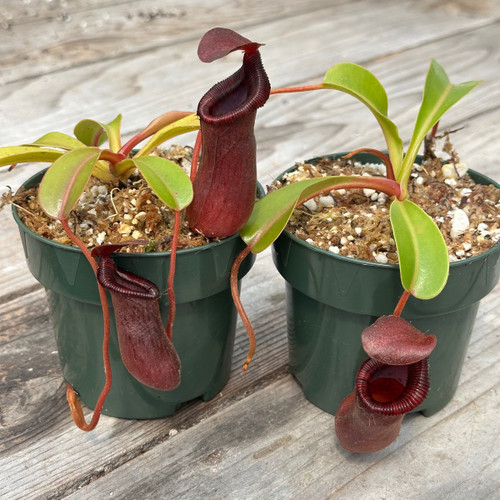
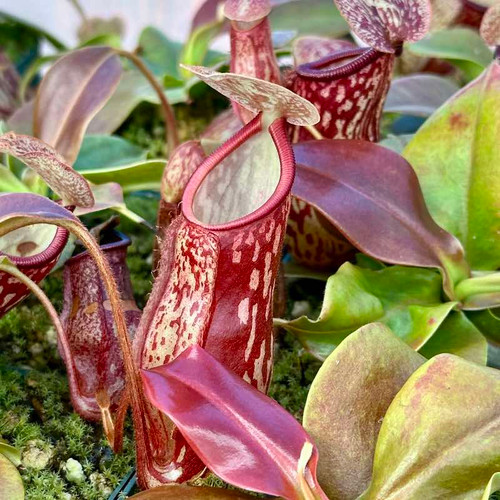
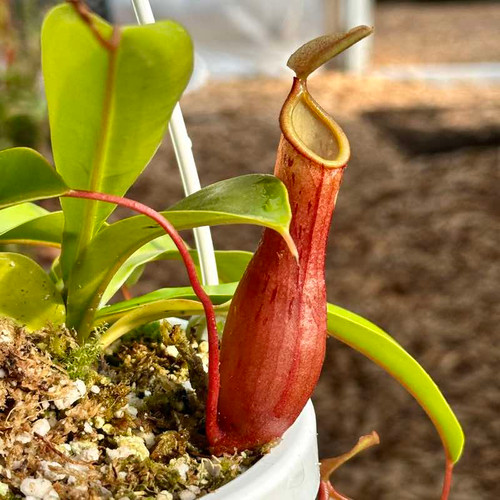
Species and hybrids like Nepenthes sanguinea, N. truncata, N. albomarginata, Deroose alata, Rebecca Soper, and Gaya can grow successfully without artificially high humidity when their other growing requirements are met. If you bought your plant at a local nursery or garden show where it was openly displayed, it is likely to adapt to your normal household conditions.
There are exceptions. Some specialty Nepenthes have narrower environmental requirements and may benefit from carefully controlled humidity and temperature. These plants are generally sold by specialty nurseries rather than as common houseplants.
For complete growing recommendations, see our Nepenthes Care Guide.
Why Does Relative Humidity Change with Temperature?
To understand why constant high humidity is unnecessary, it helps to look at the relationship between water vapor and air temperature:
- What is Relative Humidity? Relative humidity is the percentage of water vapor in the air relative to the maximum amount the air can hold at that specific temperature.
- Temperature Connection: Warm air can hold more water vapor than cold air. Even if the actual amount of water vapor stays the same, the relative humidity percentage drops as the temperature rises.
- Natural Fluctuations: In nature and in outdoor growing environments, relative humidity naturally rises at night when temperatures fall and drops during the day when temperatures rise. Nepenthes can acclimate to these daily fluctuations rather than requiring constant humidity.
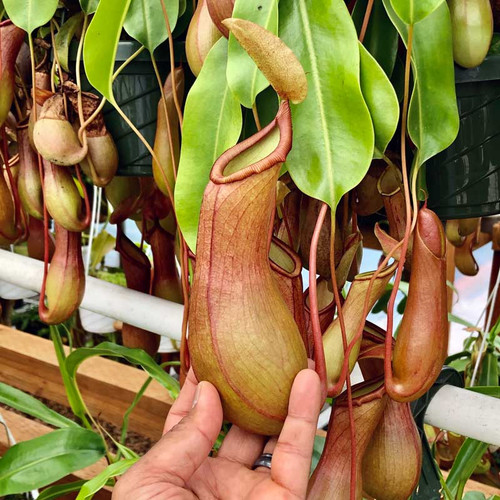
We see these fluctuations firsthand at our nursery in Oregon. During summer, daytime temperatures can rise into the upper 80s°F while relative humidity falls to roughly 25–35%. At night, temperatures commonly drop into the upper 50s°F while relative humidity rises to 65–85%. On very hot days, daytime humidity can fall even lower.
Our Nepenthes greenhouse experiences similar swings. When the exhaust fans are running during summer, greenhouse humidity may be only about 10% higher than outdoors. Yet the plants continue growing and producing pitchers.
What Really Drives Nepenthes Pitcher Growth?
For most commonly grown Nepenthes, the two most important environmental factors affecting pitcher development are light and temperature.
1. Sunlight Provides the Energy for Pitchers
Producing a pitcher is energy-intensive. A single pitcher contains complex structures, including a lid, peristome, wings, nectar glands, and digestive glands. To build and maintain these structures, Nepenthes must produce sugars through photosynthesis.
Note on Insect Feeding: Insects provide nutrients such as nitrogen, phosphorus, and potassium, but they are not the plant's primary energy source. The energy used for growth comes from sugars produced through photosynthesis.
For the commonly grown Nepenthes discussed here, we recommend 4 to 6 hours of direct sunlight daily, supplemented by bright indirect light during the rest of the day. Without adequate light, a plant may continue producing leaves while failing to develop pitchers, regardless of humidity.
If a sunny windowsill is not available, artificial lighting can supplement natural light. See our LED Lights for Tropical Plants guide for the type of lighting we use at the nursery.
2. Temperature Controls Plant Metabolism
A plant’s metabolism is temperature-dependent. When conditions are too cool, metabolic activity slows, and pitcher production may slow or stop. Excessive heat can also damage tender, developing tendrils and pitchers.
For many standard household varieties, a daytime range of roughly 68°F to 88°F is suitable, with a nighttime drop to around 50°F to 65°F. Specialty species may require narrower temperature ranges.
If your plant is growing leaves but not making pitchers, see our Troubleshooting a Pitcherless Nepenthes guide for other factors to check.
What Is the Benefit of Higher Humidity?
Humidity is not irrelevant. Under otherwise suitable growing conditions, higher and more stable humidity can influence pitcher size.
What we observe at our nursery: During summer, when greenhouse relative humidity may fall to roughly 25–40%, our Nepenthes continue producing pitchers. During winter, when the greenhouse is closed and humidity can rise above 85%, we do not see plants suddenly produce more pitchers simply because humidity is higher. Instead, we generally see larger pitchers.
For example, a Nepenthes sanguinea that produces a pitcher around 6 inches tall during the drier summer season may produce one around 8 inches tall during the more humid winter season—a difference of roughly 25%.
This appears to be a natural response to moisture loss. Under lower, more variable humidity, the plant may produce somewhat smaller pitchers while remaining healthy and actively growing.
Common Questions About Nepenthes and Humidity
Do Nepenthes need a humidifier?
Most commonly available Nepenthes do not need a humidifier. Established plants can usually acclimate to normal household humidity when their lighting, temperature, watering, and other growing conditions are appropriate.
Will higher humidity make my Nepenthes produce pitchers?
Not necessarily. Adequate light and suitable temperatures are more important factors to investigate when a Nepenthes stops producing pitchers. Higher humidity may increase pitcher size when other growing conditions are already suitable.
Can Nepenthes grow at 30–40% humidity?
Many commonly cultivated Nepenthes can acclimate to periods of relative humidity in this range. Our plants regularly experience summer greenhouse humidity around 25–40% while continuing to grow and produce pitchers.
Why is my Nepenthes growing leaves but not pitchers?
Insufficient light and unsuitable temperatures are two of the first factors to check, but other stresses can also interfere with pitcher development. See Troubleshooting a Pitcherless Nepenthes for a step-by-step diagnostic guide.
Watch Part 2!
• The Humidity Myth, Part 2: Your Nepenthes Doesn't Need a Humidity Dome
• The original question and response have been edited for publication.
• To submit a carnivorous plant question, visit Ask the Growers.


![Soil, Peat/Perlite Mix [Gallon Bag]](https://cdn11.bigcommerce.com/s-4kt71d4v98/images/stencil/500x500/products/120/2084/Soil-60__12201.1664306082.jpg?c=1 "Soil, Peat/Perlite Mix [Gallon Bag]")



![Soil, Tropical Pitcher Plant Mix [Gallon Bag]](https://cdn11.bigcommerce.com/s-4kt71d4v98/images/stencil/500x500/products/121/3209/Soil-2__11156.1776819725.jpg?c=1 "Soil, Tropical Pitcher Plant Mix [Gallon Bag]")