LED Lights for Tropical Plants
- March 6, 2023
Hi, I’m Sean Springfield, one of the growers at Sarracenia Northwest. I’ve been growing Nepenthes for over a decade, and now I manage the tropical greenhouse here at the nursery where we propagate Nepenthes, sundews, and butterworts.
In this video, I’m going to share with you my thoughts on LED lights for tropical carnivorous plants. With so many types of grow lights on the market, it can be hard to decide which is right for you. So I’m gonna break it down for you, share what we use at the nursery, and what to look for and what to avoid when shopping for lights for your plants.
The lights we use in the greenhouse are actually ordinary white shop lights. We like these particular fixtures because they can be daisy-chained to run along the length of a bench. This is a great feature if you have a lot of plants lined up, like we do here, or on a sunny windowsill in your home.
On the upper bench, these provide supplemental lighting on short, cloudy days, which we get a lot of here in the wintertime in Oregon. In the summer, we don’t need to use them because we have plenty of sunlight and long days. We also use these lights on the lower benches where we propagate our sundews. Because the lower benches get less sunlight and rely more on the lights, these are kept on year-round.
Now, you may be wondering why we use LED shop lights and not something marketed specifically for growing plants. The reason we don’t use lights designed for plant growth is because we’re using lights to supplement natural sunlight that the plants are already getting. Again, we have lots of cloudy days in winter, so our plants could use a boost. If we were to use grow lights, it would cost us up to six times as much.
Many of the LED lights marketed as grow lights feature a combination of red and blue diodes, and often no white diodes at all. A lot of growers call these blurple lights. The main drawback with these blurple lights is that they look unnatural, and working under them can cause eye strain and headaches. When you’re using them, it’s difficult to identify any problems early on, because it’s difficult to look at your plants.
I know Jeff and Jacob have experimented with blurple lights on their Nepenthes. I’ve also experimented with them on my personal collection, and none of us were happy with the results. We didn’t get the growth we wanted and those lights weren’t worth the hassle. We’ve also experimented with blue and white panels on the lower benches at the nursery. Plants responded okay to them, but we discontinued them mainly because we also had issues with eye strain and headaches from working around them. We also couldn’t daisy chain these panels, so we needed to use lots of extension cords and power strips.
Shop lights, on the other hand, produce fantastic results for our tropical carnivorous plants. The light is white, so it’s easier on the eyes. Our plants look natural when growing under them, and it doesn’t look like we’re having a rave at night. LED shop lights are also much less expensive than comparable grow lights and easier to find in person or online. At the time of making this video, the 4-foot fixtures we use cost around 10 dollars each online.
This style of shop light typically comes in 2-foot and 4-foot lengths. You can get versions that hold one or two LED strips, depending on how strong you need your lights to be. Or you can get a more standard-looking fixture, such as this one. You can also use LED panel lights or LED lightbulbs if they fit the shape of your grow area better. LED shop lights come in either cool white or warm white. For our purposes here, it doesn’t seem to matter which color temperature we use, although I personally prefer the look of warm white fixtures.
Finally, in terms of wattage, look for something that’s around 20 to 40 watts. This will ensure your lights have enough intensity for optimal plant growth. We recommend hanging your light 18 to 24 inches above the canopy of your plants. This will give you even coverage. For reference, you can run your hand or a piece of paper along the canopy, and if the light looks too concentrated in one spot, adjust the fixture or plants accordingly. We also recommend using a timer to turn on and off your lights automatically, and giving your plants a 14-hour day. For example, you can have the lights come on at 6 in the morning and turn off at 8 in the evening.
Now, if you want to nerd out on LED lights, \we plan to release additional videos about our experiments with various LED light setups. These experiments include grow lights, such as blurple lights, blue and white fixtures, shop lights, a smart fixture, and good old-fashioned T5 fluorescent tubes. We’ll put the links here when they become available. Here at the nursery, though, we try to use what the average grower might use so our plants have a seamless transition from our nursery to your home.
So, to recap, when choosing lights to supplement natural sunlight, look for white shop lights, either warm or cool white. Select a size and style that’s appropriate for your growing area. A 20 to 40-watt fixture is sufficient for a small collection of plants. Position the lights about 18-24 inches above the plants. And set a timer for a 14-hour daylight cycle.
Thank you for watching this video. I hope you enjoyed it. If you did, please remember to like and subscribe for more videos like this. And check out growcarnivorousplants.com to see our inventory of tropical and cold-hardy carnivorous plants, growing supplies, and more.
• The original question and response have been edited for publication.
• To submit a carnivorous plant question, visit Ask the Growers


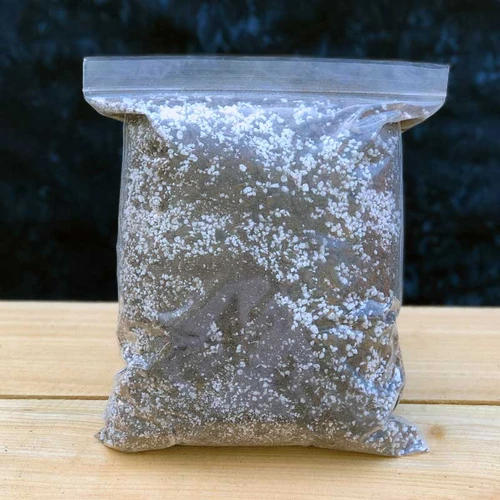
![Soil, Peat/Perlite Mix [Gallon Bag]](https://cdn11.bigcommerce.com/s-4kt71d4v98/images/stencil/500x500/products/120/2084/Soil-60__12201.1664306082.jpg?c=1 "Soil, Peat/Perlite Mix [Gallon Bag]")
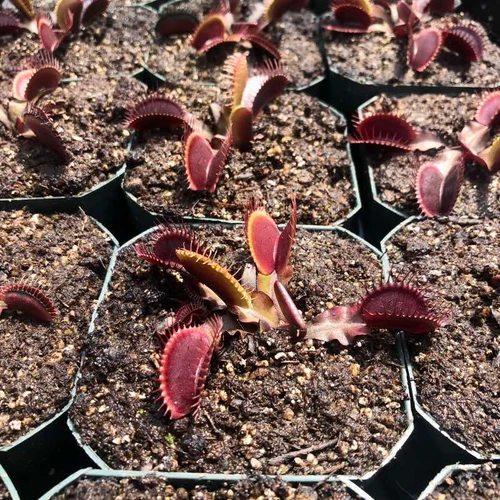


![Soil, Tropical Pitcher Plant Mix [Gallon Bag]](https://cdn11.bigcommerce.com/s-4kt71d4v98/images/stencil/500x500/products/121/3209/Soil-2__11156.1776819725.jpg?c=1 "Soil, Tropical Pitcher Plant Mix [Gallon Bag]")