Is Perlite Safe for Carnivorous Plants?
- September 25, 2022
Is perlite safe to use with carnivorous plants? A customer asked us that question a while back because he read on another carnivorous plant website that perlite is alkaline, and that you shouldn’t use no more than 20% of it in a carnivorous plant mix. On top of that, he shared an idea that perlite has fluoride in it, and it could potentially harm your carnivorous plants. Well, that was news to us because we use a soil mix of 50% perlite, and we’ve used that mix since the start of the nursery in 1995. So, let’s take a closer look at what perlite really is.
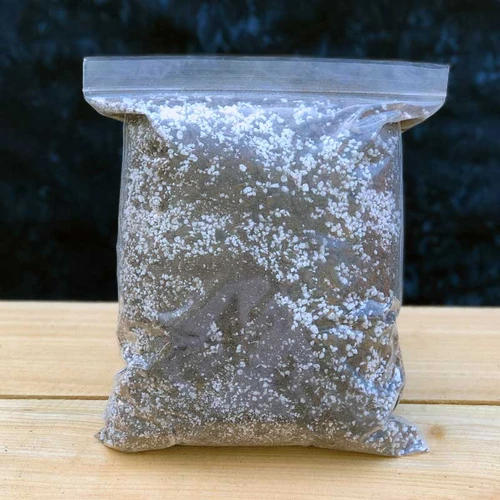
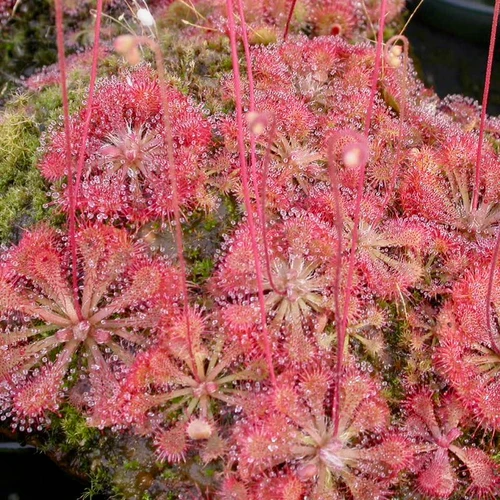
Now, the bulk of the plants we grow are Sarracenia, Venus flytraps, and sundews. The mix we use for these plants is 50% peat moss and 50% perlite. Perlite is a small volcanic rock that has been super-heated, which causes the rock to puff up to 12 times its volume. Because it’s puffed up, perlite has lots of air spaces, which makes it useful in soil mixes because it adds volume, prevents soil compaction, and improves aeration and drainage. Plus, it’s very light.
Now, with carnivorous plants, you want the soil to be acidic. If the soil is alkaline, it will kill off the roots. So the question is, “Is perlite alkaline? And will it turn acidic soil alkaline?” Well, let’s find out.
Now, to test that out, I’m going to use this pH meter. Neutral pH is 7. When a pH is below 7, it’s considered acidic. When it’s above 7, it’s considered alkaline. Drinking water is generally about 7. Soft water, though, is slightly acidic. And we use soft water here at the nursery. It’s filtered through reverse osmosis. So, let’s check the pH of this water. And we see it’s about 6.23… 6.20. OK.
Now, I have perlite right here. It’s also been soaking in water for the past several hours. And it should be roughly the same pH. And 6.24. Yup. So, we can confirm that perlite is not alkaline. It didn’t change the pH of the water. I’m just rinsing this off.
Now, I have peat moss, right here. And peat moss is partially decomposed sphagnum moss. And I also have a mix of 50% perlite and 50% peat moss soaking in water. So, let’s test the peat moss. And it’s pretty acidic here. It’s reading about 3 point… 4.36 there. 4.36.
Now, if perlite does interact with the peat moss and changes its pH, we will see a change in the reading here. I just have to wait until this gets down to zero. And what you hear in the background is just one of our exhaust fans that just kicked in. Right. It’s reading zero now. And we get a reading of 4.52. So, not much change there. So, we can at least confirm that perlite is inert and it does not change the pH of soil. It does not interact with peat moss in any significant way.
So, based on these results, we can confirm that perlite is neither alkaline nor acidic. In short, perlite is inert. It doesn’t interact with any soil ingredient. Now, what about fluoride in perlite? In 1996, researchers studied the potential fluoride toxicity in perlite. They used three crops of fluoride-sensitive plants. Now, if there were fluoride toxicity in perlite, they would see these plants promptly die off. That wasn’t the case. They didn’t find any fluoride toxicity in fluoride-sensitive plants in regards to perlite. They concluded, “Fluoride toxicity does not stem from these sources of perlite.”
So, there you go. Perlite is safe to use with carnivorous plants. It’s inert and doesn’t alter the pH of peat moss. But the next question is, how much should you use? One source says to use 20%. Another source to use 50%, and that would be us. So, which is it? And that’s a great question. And I'll address that in the next video right here.
• The original question and response have been edited for publication.
• To submit a carnivorous plant question, visit Ask the Growers

![Soil, Peat/Perlite Mix [Gallon Bag]](https://cdn11.bigcommerce.com/s-4kt71d4v98/images/stencil/500x500/products/120/2084/Soil-60__12201.1664306082.jpg?c=1 "Soil, Peat/Perlite Mix [Gallon Bag]")



![Soil, Tropical Pitcher Plant Mix [Gallon Bag]](https://cdn11.bigcommerce.com/s-4kt71d4v98/images/stencil/500x500/products/121/3209/Soil-2__11156.1776819725.jpg?c=1 "Soil, Tropical Pitcher Plant Mix [Gallon Bag]")