3 Nepenthes in a Terrarium: Why Is There Only 1 Pitcher?
- October 20, 2026
Quick Glance: Terrariums can make Nepenthes lighting harder to manage because light intensity depends on distance from the fixture. In one setup, a tall Nepenthes eymae reached the light and burned while shorter Nepenthes produced few or no pitchers. In another, plants with very different light needs shared one fixed enclosure. Start with suitable lighting, then adjust each plant based on new growth and overall appearance.
Why Were Three Nepenthes Producing Only One or Two Pitchers?
The plants were growing at different heights under the same fixed light, so they weren't necessarily receiving the same useful light intensity.
The first grower contacted us because a Nepenthes eymae had grown to the top of a terrarium and asked how to prune it. The plant had even become slightly burned near the light.
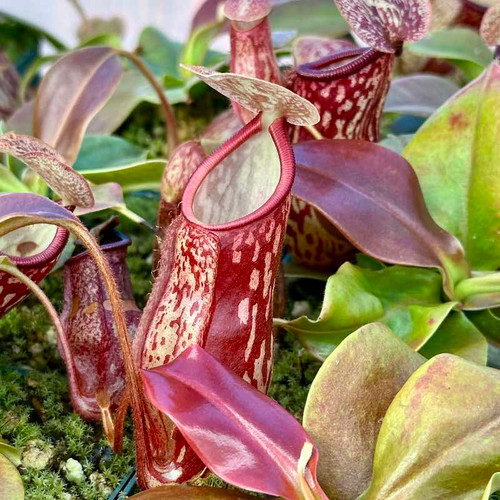
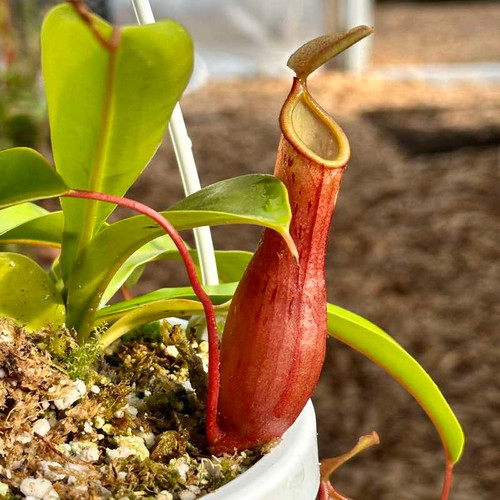
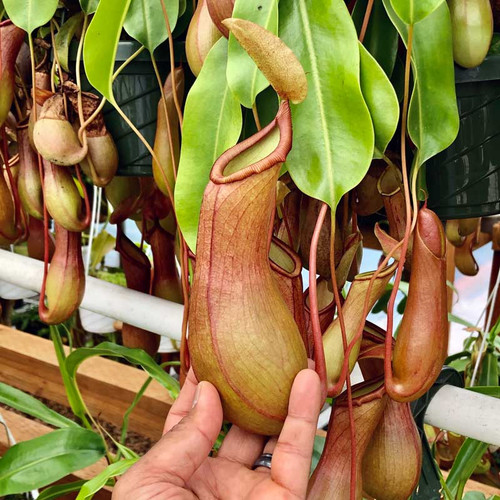
But another detail caught my attention. The terrarium had three Nepenthes (Deroose Alata, N. albomarginata, and N. eyma) and only one pitcher. These plants can grow well as houseplants and will regularly produce pitchers in a home setting.
The temperature in the terrarium was 72°F, and the relative humidity was 58%. These readings are normal, and many Nepenthes will produce pitchers in this type of setting. The biggest clue was how the plants were responding to the light source.
Grower's Key Point
A lighting recommendation is a starting point, not a fixed rule. The amount of light that reaches a plant changes with distance from the fixture. Different plants may therefore need to be raised, lowered, or moved as they grow. A fixed terrarium makes those adjustments more difficult.
Are Lumens and Lux the Same Thing?
No. They describe different parts of the lighting system.
Lumens describe the amount of visible light emitted by a light source. Lux describes the amount of visible light reaching a surface, such as a plant leaf.
That distinction matters because light spreads as it travels. You cannot directly convert the lumen rating of a fixture into lux at the plant without knowing the distance and how the fixture distributes the light over the growing area.
This came up because a second grower was using a 200-watt light over a mixed terrarium containing Nepenthes, Utricularia, Pinguicula, and several sundews. He questioned why our care guides recommend starting with a 2,500-lumen LED when different carnivorous plants clearly have different lighting needs.
His question was a good one because the recommendation has three parts.
1. Start With a Suitable Light Source
We recommend white LED shop lights producing approximately 2,500 lumens or more. Specialized red-and-blue grow lights are not required for the tropical carnivorous plants covered in our care guides.
2. Start at Approximately 12 Inches
Place the light approximately 12 inches above the plants as a starting point. Different fixtures distribute light differently, so 12 inches is not a universal target.
3. Watch the Plants and Adjust
This is the most important part. If a plant is bleaching or burning, move it farther from the light. If a sundew is not producing dew, a Nepenthes is not producing pitchers, or a plant is not developing its characteristic coloration, move it closer.
The starting point may be similar. Where each plant ends up can be very different depending on how it responds to the light fixture.
What Is the “Sweet Zone” in a Terrarium?
The sweet zone is the area where a particular plant receives enough light for healthy growth without being damaged by excessive intensity or heat.
In the first terrarium, the N. eymae had grown through that zone and reached the light. Meanwhile, the shorter Nepenthes were not producing pitchers. From our experience helping growers, inadequate light is the most common cause of poor pitcher production.
I don't know the specs of this grower’s light, so I can't say inadequate lighting is the only factor. But the growth pattern suggests that the useful lighting zone may be relatively narrow.
The Deroose Alata appeared to be growing into that zone and was close to producing pitchers. The N. albomarginata appeared to remain below it. The N. eymae had grown beyond it and reached the light.
There is nothing wrong with pruning Nepenthes. We prune them all the time because that's how we propagate them. What interested me was why this plant needed to be pruned: one plant had outgrown the useful lighting zone while the others had not yet reached it.
Why Is a Mixed Terrarium More Difficult to Light?
Different carnivorous plants can respond very differently to the same light source.
The second terrarium provides a good example. The grower had a Drosera adelae. Unlike many sundews that grow in open, sunny habitats, D. adelae naturally grows on the forest floor in low light. The plant in the terrarium looked unusually dark, suggesting that it was receiving too much light.
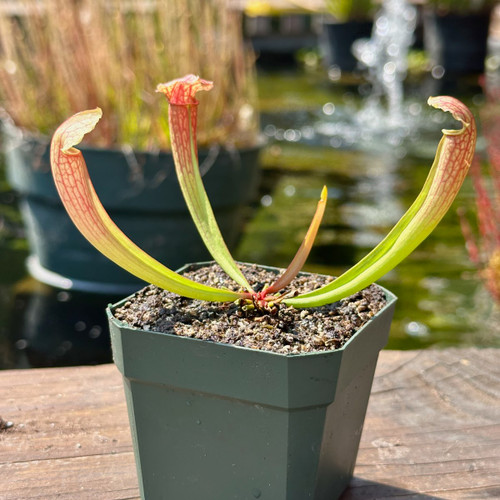
Nearby was a Sarracenia purpurea. We grow this species outdoors in full sun, where it develops rich coloration. The plant in the terrarium was paler and seemed to need more light.
So one plant would benefit from moving farther from the light while another would benefit from moving closer. That's difficult to do when both plants are fixed in the same enclosure.
The problem wasn't that the grower had chosen bad lighting. The problem was that he had created one lighting environment for several plants with different requirements.
Can Heat and Root Health Also Matter?
Yes. Lighting is only one part of the growing environment.
LED fixtures still produce heat, and that heat can accumulate inside an enclosure. We discussed this problem in our earlier Cape sundew terrarium video, where increasing sunlight also increased the risk of overheating the plant.
There may also be questions involving root health, growing media, and drainage in a terrarium. I did not have enough information from these submissions to diagnose those factors, so the focus here is the problem we can see most clearly: fixed lighting and limited ability to reposition individual plants.
How Would I Grow These Plants Instead?
I prefer growing tropical carnivorous plants in individual pots because each plant can be adjusted independently.
A sunny windowsill is often the simplest option for Nepenthes and many tropical carnivorous plants. If natural sunlight is insufficient, use an LED shop light as supplemental lighting or as the primary light source.
If you are using LEDs as the main source of light, start approximately 12 inches above the plants. Monitor the new growth over the next two to three weeks, then adjust each plant individually. Move a bleaching plant farther away. Raise a plant that lacks color, dew, or pitcher production closer to the light.
Individual pots also provide more flexibility for managing temperature, watering, growing media, and root health.
Our Conclusion:
The first grower asked how to prune a Nepenthes so it would fit the terrarium. I would ask the opposite question: What growing space will accommodate the plant as it grows? Carnivorous plants are plants. Start with good light, watch how each plant responds, and adjust. That's much easier when you can move each plant independently.
Frequently Asked Questions About Nepenthes and Terrarium Lighting
Why is my Nepenthes growing leaves but not pitchers?
Insufficient light is one of the most common causes we see. Temperature, air drafts, root health, acclimation, and plant maturity can also affect pitcher production. If the plant is producing healthy leaves but no pitchers, evaluate the complete growing environment rather than assuming humidity is the problem.
How far should an LED light be from a Nepenthes?
For the LED shop lights described in our care guides, we use approximately 12 inches as a starting point. The final distance depends on the fixture and the plant’s response. Watch new growth, coloration, and pitcher production and adjust the plant or light accordingly.
Are lumens and lux interchangeable?
No. Lumens describe the visible light emitted by a source. Lux describes the visible light reaching a surface. The amount of lux at a plant depends on the fixture, its light distribution, the growing area, and the plant’s distance from the source.
Can several types of carnivorous plants share the same artificial light?
Yes, but they may need different positions relative to the fixture. Plants with lower light requirements may need to sit farther away or be shaded, while plants that require stronger light may need to be raised closer to the fixture.
Do Nepenthes need a terrarium to produce pitchers?
No. The Nepenthes discussed here can grow and produce pitchers as regular houseplants when lighting, temperature, root health, and other basic growing conditions are appropriate. A terrarium does not correct inadequate light simply by providing higher or more stable humidity.
Related resources:
• How to Grow Nepenthes — Complete Care Guide
• Troubleshooting a Pitcherless Nepenthes: 6 Things to Check
• How to Grow Tropical Sundews
• Cape Sundew in a Terrarium
• Submit a Question to Ask the Growers