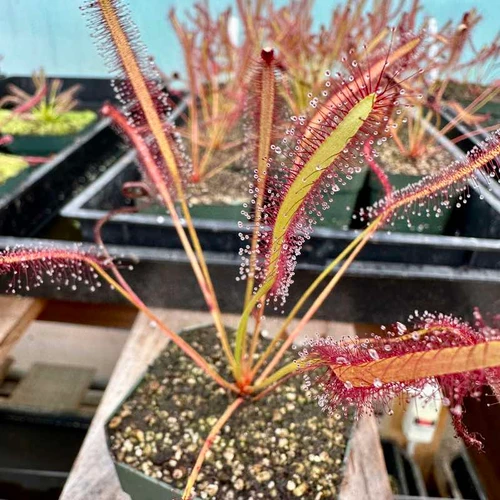
Q/A #165 - Cape Sundew Isn't Producing Dew
- September 23, 2026
Quick Glance: A Cape sundew in a terrarium is growing, but despite the humidity, it has no dew. The leaf tips are also dying off. While low light, air drafts, mineral buildup, and root disturbance can cause these symptoms, excessive heat in the terrarium from sunlight exposure is the likely cause. The grower should remove the sundew from the terrarium and grow it like a regular houseplant instead.
Why Isn't This Cape Sundew Producing Dew?
In this case, I strongly suspect heat inside the terrarium is the primary reason the Cape sundew isn't producing dew.
The grower sent us his question in November 2025. He had received the plant about three weeks earlier and placed it in a terrarium. He then placed the terrarium in a west window. Despite the humidity and sunlight, the plant never began producing dew, and after approximately two weeks, the tips of its leaves started turning brown. The grower reported that the plant received four to six hours of natural sunlight. He was also using distilled water and a mixture of peat moss, sphagnum moss, and quartz sand.
So there are two symptoms to explain: no dew and brown leaf tips. We also have to determine whether the problem comes from light, heat, mineral buildup, air movement, or root disturbance rather than assuming that heat alone is responsible. Inadequate sunlight may also be contributing, but the brown leaf tips and closed terrarium make temperature the first problem I would address.
Grower's Key Point
The droplets on a sundew are not condensation from humid air. They're actually a secretion of sugars and enzymes. A plant needs sunlight to secrete these droplets. However, excessive heat can damage the tissues that secrete them. High humidity doesn't compensate for low light or excessive heat.
Does High Humidity Make a Sundew Produce Dew?
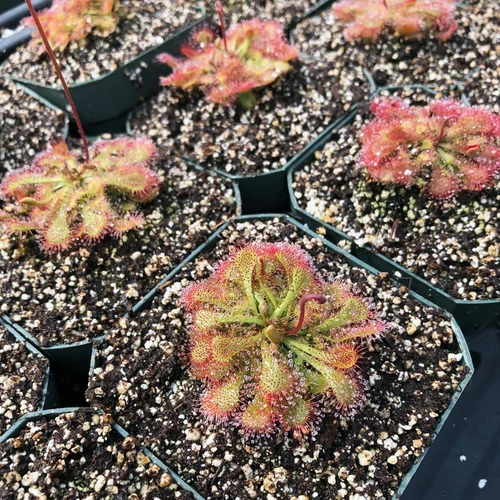
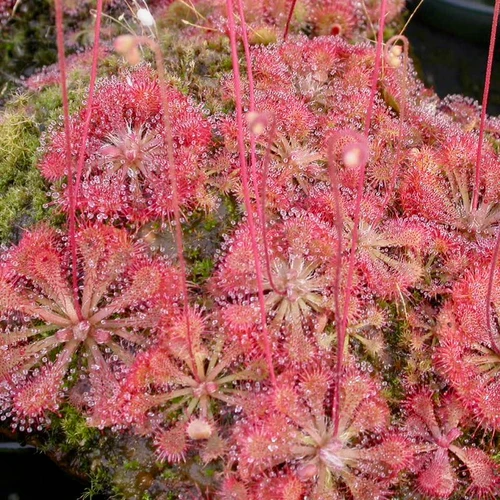
No, the dew is NOT condensation like morning dew. The misconception is understandable because the droplets look like water. But what looks like dew is actually a sticky concoction of sugars and enzymes that helps the plant attract, capture, and digest insects. Sundews need sunlight for energy to produce them. Increasing humidity will not make the glands secrete it. This is why a sundew can remain dull and dry inside a humid terrarium. We have seen this countless times with plants grown in inadequate light, even when their humidity remained constantly high.
How Do Light and Temperature Affect Dew Production?
A sundew needs adequate light to secrete dew, but excessive heat can damage the delicate tissues that produce it.
Producing sugars and enzymes requires energy, and sundews get that energy from light through photosynthesis. Without enough light, the plant won't have the energy to produce dew. No amount of humidity will correct that energy shortage.
Temperature creates a different problem. If the plant becomes too hot, the dew-producing tissues can become damaged and stop working. Damaged leaves may remain dry even after conditions improve, so the grower must wait for healthy new leaves before judging the plant's response.
This creates a difficult balance inside a terrarium. The grower tries to provide the strong light a Cape sundew needs, but that same sunlight can cause heat to accumulate inside the closed container.
Could Inadequate Sunlight Be Part of the Problem?
Even though the grower reported that his plant gets four to six hours of direct sunlight, which is ample for a Cape sundew, there is a possibility his plant isn't getting as much sunlight as he thinks.
When I examine his photos, the plant appears to be in what I assume is a west-facing window because of the sunset. Trees near the window may obstruct some of the sunlight. Lighting therefore remains a possible factor. But another detail carries more diagnostic weight: the plant is enclosed in a terrarium and has browning leaf tips.
How Can a Terrarium Cause Problems for a Cape Sundew?
A sunny terrarium can trap heat around the plant, making it difficult to provide enough light without overheating the sundew.
There is a big difference between growing a Cape sundew on a sunny windowsill and growing one inside a terrarium on that same windowsill. An open windowsill allows heat to dissipate into the room. A terrarium is a closed microclimate, so its temperature can rise as sunlight enters it.
I had no way to measure the temperature inside this grower's terrarium directly. However, the dead leaf tips make excessive heat a serious possibility. If those temperatures damaged the glands and surrounding leaf tissue, the existing leaves will not simply become dewy again. The plant will need to produce new leaves under better conditions.
What Other Causes Can Make a Sundew Dewless and Brown?
Heat and inadequate light are not the only possible causes. Water quality, strong air movement, and root disturbance can produce overlapping symptoms, so each possibility needs to be compared with what we can observe.
Mineral Buildup
Water high in minerals can cause sundew leaf tips to die and can interfere with dew production. In this case, the grower used distilled water, and his growing medium contained peat moss, sphagnum moss, and quartz sand. Those are appropriate for a sundew, so I can reasonably rule out mineral buildup.
Strong Air Drafts
A continuous, strong draft can dry the dew from a sundew and damage delicate leaf tissue. This plant was growing inside a terrarium, so an air draft is very unlikely.
Root Disturbance
Sundews sometimes stop producing dew temporarily after repotting because of root disturbance. The grower likely disturbed this plant when he created the terrarium. However, the plant continued producing a new leaf nearly every week, which suggests that it was still pulling water from the soil. Excessive root disturbance therefore doesn't appear to be a problem.
What Is the Most Likely Cause?
The evidence points to excessive heat in a closed terrarium. Inadequate light is still possible, but we need to address the excessive heat first.
Our Conclusion:
I strongly suspect that heat inside the closed terrarium is the primary reason this Cape sundew is dewless and developing brown leaf tips. Inadequate sunlight remains possible. The first priority, however, is to improve temperature regulation. After that, we can determine whether lighting also needs adjustment.
How Would I Fix This Cape Sundew's Setup?
I would first simplify the setup by decreasing the humidity, not increasing it.
1. Remove the Terrarium Lid
First, remove the lid and allow the Cape sundew to acclimate to normal household humidity for approximately one week. This also immediately improves temperature regulation.
2. Transfer the Plant to a Pot With Drain Holes
After a week, carefully move the plant from the glass jar into a pot with drain holes. Drain holes improve soil aeration. The soil is still good, so keep the existing soil around the roots as intact as possible. This will also prevent unnecessary root disturbance.
3. Keep the Soil Wet With Low-Mineral Water
Place the pot in a shallow tray with low-mineral water so the soil stays wet. The grower is already using distilled water, so he can continue using that.
4. Monitor New Growth to Assess Lighting
Return the open pot to the same window initially. I don't know whether insufficient sunlight is a problem, but after two to four weeks, examine the new growth. If the new leaves are also dewless, that would tell us that sunlight was inadequate as well.
Do Tropical Sundews Need Terrariums?
Tropical sundews are plants, and they adapt to fluctuating humidity just as other plants do. From what we know about plant physiology and what we have observed at our nursery and with customers over the past several decades, tropical sundews can grow like regular houseplants.
A terrarium might seem like a way to simplify the growing process by keeping humidity constant. But what it actually creates is a closed microclimate where the margin for error is very tight and unforgiving. Sunlight, temperature, airflow, and soil evaporation become difficult to manage independently, and the enclosure prevents the plant from adapting to normal environmental changes.
For a Cape sundew, an unobstructed sunny window, the correct soil, and lots of low-mineral water are enough to keep the plant happy. No terrarium is required.
Frequently Asked Questions About Cape Sundews and Terrariums
Is the dew on a sundew caused by humidity?
No. A sundew's dew is a sticky secretion containing sugars and enzymes, not condensation from moisture in the air. The plant needs energy from photosynthesis to produce this secretion.
Can a sunny terrarium overheat a Cape sundew?
Yes. Sunlight passing through the glass can raise the temperature inside the closed container and damage the tissues that produce dew. Brown leaf tips are a big clue that the plant is overheating.
How much sunlight does a Cape sundew need?
A Cape sundew normally needs several hours of direct sunlight each day, but the actual intensity and temperature also matter. Four to six hours of unobstructed, direct sunlight (with 12 to 14 hours of daylight) is usually enough, as long as the plant isn't overheating.
How quickly should a Cape sundew recover after leaving a terrarium?
After correcting the setup, the plant should produce new growth over the next two to four weeks. If the new leaves are dewless, then we'd know that we need to increase the lighting.
Can root disturbance temporarily stop a sundew from producing dew?
Yes. Repotting can temporarily interrupt dew production while a sundew readjusts. Continued production of healthy new leaves, however, suggests that the roots are still supplying the plant with water.
Additional resources:
• How to Grow Tropical Sundews
• Q/A #152 - Troubleshooting a Struggling Sundew
• Tropical Sundew and Butterwort Video Playlist
• Browse Tropical Sundews
• The original question and response have been edited for publication.
• To submit a carnivorous plant question, visit Ask the Growers.


![Soil, Peat/Perlite Mix [Gallon Bag]](https://cdn11.bigcommerce.com/s-4kt71d4v98/images/stencil/500x500/products/120/2084/Soil-60__12201.1664306082.jpg?c=1 "Soil, Peat/Perlite Mix [Gallon Bag]")