Is a TDS Meter Useful to Detect Minerals in Peat Moss?
- April 18, 2023
Jacob here with Sarracenia Northwest. I have a glass of water here. Using a TDS meter like this, I can quickly assess the mineral concentration of this water, and this water is 14 parts per million. Any reading below 50 parts per million of dissolved minerals is safe enough for carnivorous plants. I also have a glass with peat moss soaking in the same type of water. Peat moss is the primary soil ingredient for carnivorous plants. The TDS reading of this water is 91. In this video, I will go over why measuring peat moss water with a TDS meter, like this, is useless.
One of the great myths I hear from new growers is that you can use a TDS meter to assess mineral levels in peat moss. That's not entirely true. A TDS meter measures total dissolved solutes, which includes any dissolved compound. In the case of peat moss, this would consist of humic acids, fulvic acids, and tannins. These organic compounds are part of the natural breakdown of sphagnum moss. A TDS meter doesn’t differentiate these peat moss compounds from mineral contaminants, such as calcium, magnesium, and iron. On top of that, as you get lower down in the bog, peat moss breaks down even further, releasing even more tannins, which can give you inaccurate TDS readings.
Here I have freshly brewed green tea, which is simply dried tea leaves. One of the touted health benefits of drinking green tea is the antioxidant properties of its tannins. I prepared the tea with the same filtered water that had a TDS reading of 14 ppm. After brewing, we have a TDS reading of approximately 325. 330. It’s fluctuating there. But given the amount of tannins in green tea, I would expect the TDS reading to be high like this. So, if you want to test for minerals in peat moss, you have to test for individual metals, and a TDS meter, like this, is the wrong tool for the job.
Now, you can use these test strips that detect calcium carbonate, a natural mineral in water. And what you do is dip the stick into the water or liquid, and then you match it up to the color chart, right here
So, we’re going to test the tea water and see how it does because it had a reading of 330 parts per million. And then after two seconds in the liquid, we wait almost 30 seconds to see where it lands on this color chart. But already we know it’s not in this range despite having a reading of 330. And as we move down, we see that it’s closer to this range, which is zero to 25 parts per million, which matches the TDS reading of the distilled water. Not the distilled water. The filtered water that we used. Anyway, one of the things about these test strips is that it gives you a range. It doesn’t give you an absolute value like the TDS meter does.
But, anyway, let’s try the peat moss water. I’ll take out another test strip. And then set it into the water for two seconds. Shake off the excess. And after 30 seconds, we can see that it’s not in this range, the very hard range. But as we move down, looks like it might be in this range. Maybe? In any case, these test strips give you a ballpark figure of the mineral content of the water.
While these test strips test for calcium in your water, the real question is, should you be concerned about calcium in your peat moss? No. Consider the growth of sphagnum moss. Sphagnum moss can grow only in areas where calcium is naturally low, away from limestone deposits. So it’s very unlikely that there would be large amounts of calcium contaminants in peat moss. The Ozark Mountains in Missouri are an example of this. The area has lots of wetlands but almost no sphagnum bogs because of heavy limestone deposits.
The contaminants most commonly found in peat moss are nutrients from decomposing plants like fallen trees. There's also wildlife to consider, like decaying animals and manure. These contaminants will load peat moss with nitrogen, phosphorus, and potassium, which would be great fertilizer for regular plants, but in high concentrations, these nutrients can kill carnivorous plants.
If you are at all concerned about contaminants in your peat moss, the best test to do is a pH test. Peat moss has an acidity of 3 to 4.5. If your peat moss is within that range, it’s good to go. You can use a pH meter like this. Make a solution of water and peat moss, and take your reading. And right now, we’re getting a reading of 3.38.
If your peat moss has a pH of 5 or higher, then it’s likely that there are salts that are neutralizing the acidity of your peat. And the closer the pH is to 6, the more contaminants are in your peat moss. Some growers might argue that you can flush the contaminants using pure water. I disagree. For one thing, it will take a lot of water to flush nutrients out of peat. If you have a large collection, that’s not at all feasible.
Secondly, how will you know you have sufficiently flushed out the contaminants? And how will you test for that? There are test kits that will check for nitrogen levels in your soil, but that adds another layer of work. Thirdly, you will also be flushing away important components of peat moss – humic acids, fluvic acids, and tannins, components that keep peat moss acidic. For these reasons, you might be better off using the contaminated peat moss in your vegetable garden and getting a new batch of peat.
I presented you with a lot of information. So to recap, a TDS meter is great if you want to check the mineral levels in your tap or well water, but it’s not the right tool for checking mineral contaminants in peat moss. Because of the geography of peat bogs, calcium is unlikely to be a contaminant, so you can skip the water hardness test strips.
Checking the acidity your peat moss is the quickest and easiest way to assess its quality. The pH should be between 3 and 4.5. If it’s within that range, your peat moss is good to go.
If you’re in need of a carnivorous plant soil mix free of contaminants, you can purchase it through our website at GCP.com. Thank you so much for watching. I look forward to seeing you in another video.
• The original question and response have been edited for publication.
• To submit a carnivorous plant question, visit Ask the Growers

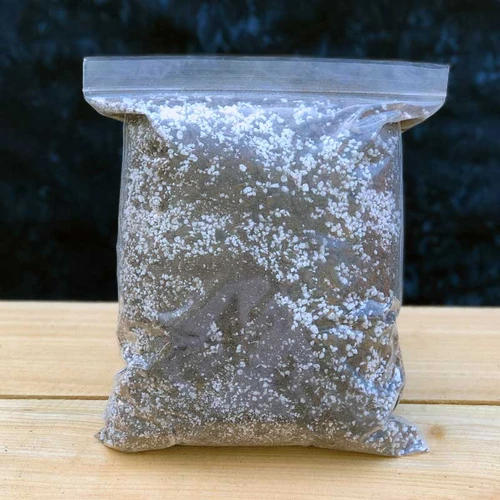
![Soil, Peat/Perlite Mix [Gallon Bag]](https://cdn11.bigcommerce.com/s-4kt71d4v98/images/stencil/500x500/products/120/2084/Soil-60__12201.1664306082.jpg?c=1 "Soil, Peat/Perlite Mix [Gallon Bag]")
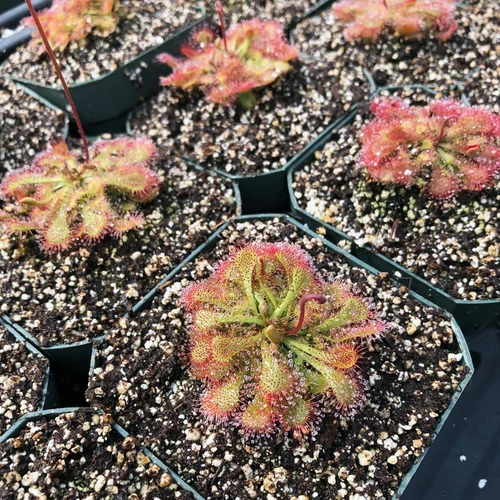



![Soil, Tropical Pitcher Plant Mix [Gallon Bag]](https://cdn11.bigcommerce.com/s-4kt71d4v98/images/stencil/500x500/products/121/3209/Soil-2__11156.1776819725.jpg?c=1 "Soil, Tropical Pitcher Plant Mix [Gallon Bag]")