Q/A #161 - Do Nepenthes Need a Humidity Dome? The Humidity Myth, Part 2
- May 19, 2026
Quick Glance: Most commonly available Nepenthes do not need a humidity dome. Although consistently higher humidity can produce somewhat larger pitchers, an enclosed dome can also reduce airflow and slow the rate at which the potting mix dries. In our experience, plants kept enclosed for long periods are more likely to develop weak growth, overly wet soil, and mold or fungal problems. For most common varieties, a sunny windowsill or appropriate artificial lighting is a simpler and more reliable way to grow healthy plants.
Do Nepenthes Need a Humidity Dome?
No, not for most commonly available varieties. Established Nepenthes can acclimate to the normal daily fluctuations in household humidity when their other growing requirements are met. A humidity dome is therefore unnecessary for the kinds of Nepenthes most growers find at nurseries, garden shows, and general plant shops.
In Part 1 of the Humidity Myth, we explained why constant high humidity is not the primary driver of pitcher production. Light and suitable temperatures are more important for determining whether a commonly grown Nepenthes produces pitchers, while higher humidity can influence their size.
That leads to the practical question for Part 2: if higher humidity can produce larger pitchers, should you grow a Nepenthes under a humidity dome anyway? For most growers, we don't recommend it.
How Do Nepenthes Adapt to Changing Humidity?
Nepenthes, like other terrestrial plants, regulate water loss as temperature and relative humidity change throughout the day. Three important parts of that process are transpiration, the leaf cuticle, and leaf size.
- Transpiration: Water vapor escapes primarily through microscopic pores called stomata. As water is lost from the leaves, water is drawn upward from the roots through the plant. The rate of water loss changes with environmental conditions, including temperature, humidity, light, and airflow.
- The Cuticle: Leaves have a waxy outer layer called the cuticle that helps limit water loss and protects the leaf surface. Its characteristics can change as a plant develops under different growing conditions.
- Leaf and Pitcher Size: In our growing conditions, Nepenthes exposed to lower and more variable humidity tend to produce somewhat smaller leaves and pitchers than comparable plants grown in consistently humid conditions.
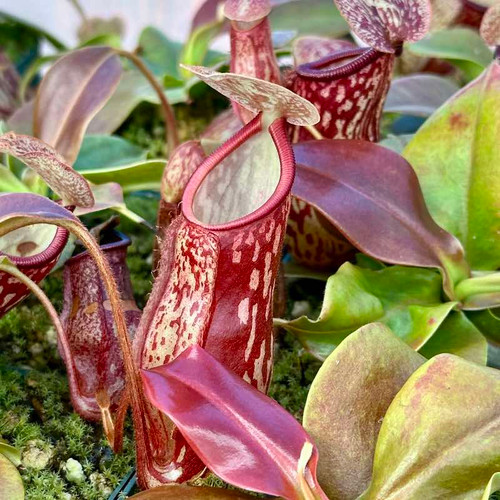
At our nursery, we have observed pitcher-size differences of roughly 25% between plants grown during more humid periods and those grown during drier periods under otherwise suitable conditions. That difference affects size, not whether a healthy plant is capable of producing pitchers at all.
What Happens When You Grow Nepenthes Under a Humidity Dome?
A humidity dome can create a very stable, humid environment. In theory, reduced water loss can allow a plant to produce larger leaves and pitchers. But a closed or poorly ventilated dome also changes several conditions at once: humidity rises, airflow decreases, transpiration can slow, and the potting mix may remain wet longer.
That combination is why we generally don't recommend long-term humidity-dome growing for common Nepenthes. The possible increase in pitcher size is usually small compared with the additional attention required to manage airflow, watering, light, and plant acclimation.
Typical Windowsill Conditions vs. an Enclosed Humidity Dome
| Growing Factor | Typical Windowsill Conditions | Enclosed Humidity Dome |
|---|---|---|
| Humidity | Fluctuates naturally as temperature changes. | Remains consistently high, especially with little ventilation. |
| Airflow | Normal household air movement. | Often reduced unless the enclosure is actively ventilated. |
| Potting Mix | Usually dries more predictably between waterings. | May remain wet longer because water loss and evaporation are reduced. |
| Plant Growth | Plants acclimate to the conditions in which they will continue growing. | New growth may become adapted to the enclosed environment and require acclimation when the dome is removed. |
| Pitcher Size | May be somewhat smaller under lower or fluctuating humidity. | May be larger when light, temperature, and other conditions are also suitable. |
What Are the Main Risks of a Nepenthes Humidity Dome?
Based on what we have repeatedly seen from growers using enclosed setups, three problems deserve particular attention.
1. Weak, Poorly Acclimated Growth
Plants that develop for long periods in a highly protected environment may produce growth that is poorly adapted to the brighter light, greater airflow, and lower humidity outside the enclosure. Leaves can appear softer, thinner, paler, or more elongated than growth produced under normal household conditions.
This becomes especially important when the dome is eventually removed. A plant that developed entirely under protected conditions may need gradual acclimation to avoid excessive water loss or leaf damage.
2. Potting Mix That Stays Wet Too Long
High humidity reduces the rate of water loss from the plant, while a closed enclosure also reduces evaporation from the potting mix. As a result, the soil can stay wet much longer than a grower expects.
Nepenthes prefer moist but well-drained, airy potting media. Keeping the root zone excessively wet for prolonged periods can damage roots and increase the risk of root rot. One warning sign is older leaves yellowing and dying unusually quickly; severe root damage can eventually affect the growing tip.
3. Mold and Fungal Problems
High humidity by itself is not the only issue. The combination of persistent moisture and poor airflow inside a closed dome can make mold and fungal problems more likely. Minor spotting or mold on an old pitcher may be cosmetic, but persistent fungal growth on leaves or new growth deserves attention.
Good air movement is one reason a greenhouse or professionally controlled growing chamber is very different from simply placing a plant beneath a sealed plastic cover.
Can Nepenthes Be Grown Successfully in High Humidity?
Absolutely. Some Nepenthes collectors grow spectacular plants in highly controlled environments with consistently high humidity. The important distinction is that these systems also manage airflow, temperature, lighting, watering, and ventilation.
They are not simply humidity domes.
Specialty species can also have more demanding environmental requirements than the common hybrids and adaptable species sold to beginning growers. Those plants may justify a controlled setup. But that is very different from assuming that every Nepenthes requires rainforest-like humidity.
Where Should You Grow a Nepenthes Instead?
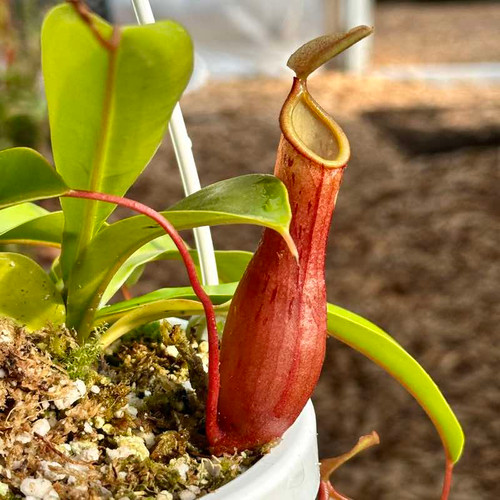
For most commonly available Nepenthes, start with a bright windowsill or suitable artificial lighting rather than a humidity dome. South-, east-, and west-facing windows can all work when the plant receives adequate light.
Grower's Key Point
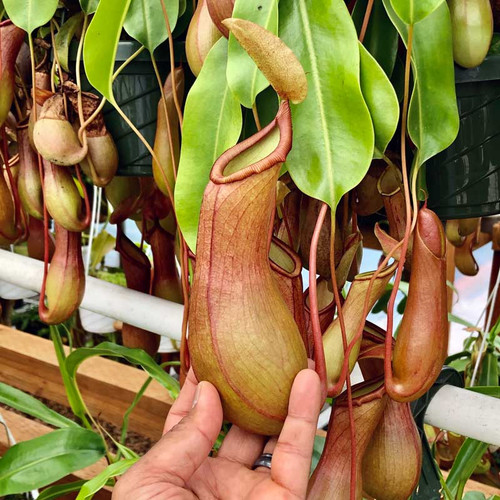
We've recommended windowsill growing for commonly available Nepenthes since we started our nursery in 1995. Given appropriate light, temperatures, watering, and soil, these plants can acclimate to normal fluctuations in household humidity without a humidity dome.
For complete recommendations on lighting, temperature, water, soil, repotting, and humidity, see our Nepenthes Care Guide. If your plant is growing leaves but not pitchers, see Troubleshooting a Pitcherless Nepenthes.
Frequently Asked Questions About Nepenthes Humidity Domes
Do Nepenthes need a humidity dome?
Most commonly available Nepenthes do not. Established plants can acclimate to normal household humidity when they receive appropriate light, temperatures, watering, and soil conditions.
Can a humidity dome cause root rot in Nepenthes?
A humidity dome does not automatically cause root rot, but an enclosed environment can slow transpiration and evaporation, allowing the potting mix to remain wet much longer. Prolonged waterlogging can damage Nepenthes roots and increase the risk of rot.
Should I put a new Nepenthes under a humidity dome?
For the common Nepenthes sold at nurseries and garden shows, we generally recommend acclimating the plant to the conditions in which you intend to grow it rather than placing it under a humidity dome. Plants that were previously grown in unusually humid conditions may benefit from gradual acclimation.
Can Nepenthes grow on a windowsill?
Yes. Many commonly grown Nepenthes make excellent windowsill plants when they receive several hours of appropriate direct sunlight or adequate supplemental lighting. Humidity is usually less important than providing enough light and suitable temperatures.
When would a Nepenthes need controlled humidity?
Some rare or specialized species have narrower environmental requirements and may perform best in a controlled growing space. In those situations, humidity should be managed together with airflow, temperature, light, and watering rather than treated as an isolated factor.
Read Part 1:
• Do Nepenthes Need High Humidity? The Humidity Myth, Part 1
• The original question and response have been edited for publication.
• To submit a carnivorous plant question, visit Ask the Growers.


![Soil, Peat/Perlite Mix [Gallon Bag]](https://cdn11.bigcommerce.com/s-4kt71d4v98/images/stencil/500x500/products/120/2084/Soil-60__12201.1664306082.jpg?c=1 "Soil, Peat/Perlite Mix [Gallon Bag]")