Reviving a Struggling Venus Flytrap
- December 20, 2024
VIDEO TRANSCRIPT
Jacob here with Sarracenia Northwest. Since 2005, we've answered thousands of questions from carnivorous plant growers and have seen plants grown in many different situations. Here's a question that we got in December 2019.
"I have a few questions about my Red Dragon flytrap. I do know it's the dormant season, but I am unsure of what to expect. My 1st question, my plant is in a glass container and inside. Is glass acceptable, a wise choice? This leads to my 2nd question, I can see the water level in the container. With most of my plants, a high water level seems to make them happy. But my Red Dragon just isn't responding positively since I replanted it in the glass container. It seems to be dying back. The current leaves are browning. So, glass container? Water level? And what should you expect in the off season?"
The grower lives in Colorado, USDA zone 5. So, overwintering a flytrap in a windowsill is appropriate for this region of the country. We recommend this type of winter care when growers in zone 6 and colder have only a small collection of outdoor perennials, such as a single Venus flytrap. However, there are some steps growers need to follow to pull this off successfully. In this particular case, this grower was off to a rough start.
First was the type of pot he's using. The grower used a glass container without any drain holes. We did a video a few years ago about undrained pots, and you can find the link to that video in the description below. In short, undrained pots are prone to anaerobic bacteria because of the stagnant closed system of these pots. In addition, if the water isn't absolutely free of minerals, minerals will accumulate over time, eventually burning the roots.
The grower also mentioned that the flytrap wasn't responding positively since being replanted in that container. Even in his photo, I can see the signs of poor root health – brown spots on the leaf edges. You can argue that these are signs that the plant is going dormant since the grower wrote to us in December, but leaf drop during dormancy looks different. The browning along the leaf edges is more associated with poor root health, which is likely from lack of soil aeration and drainage.
So, right off the bat, I recommended that he transfer his plant to a pot with drain holes and use a mix of equal parts peat moss and perlite. This will give the roots proper aeration and drainage. In time, the roots will regain their health. The grower also had his plant on that windowsill during summer, so it wasn’t very healthy going into winter. Its leaves were pale and lanky. If a flytrap is weak at the start of winter, it may die during dormancy.
So, preparation for winter dormancy begins during the growing season in summer. This is why we always recommend growing Venus flytraps outdoors in full sun, the same type of sunlight you would grow tomatoes in. Sunlight is crucial to a flytrap's health.
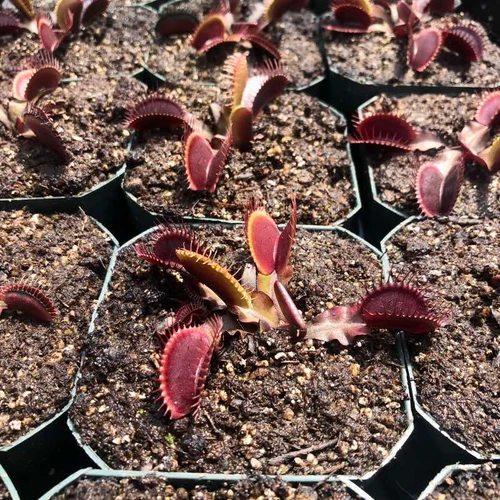
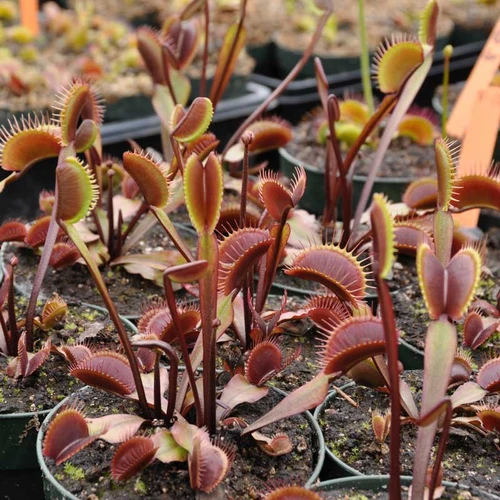
A healthy Red Dragon flytrap will have dark red leaves during the growing season. When dormant, the plant will drop most of its leaves and hunker down. Even at the start of winter, the leaves should still be dark red, like you see on our plants.
Now, I get it that the grower is in Colorado, where winters can be brutal. However, that doesn't mean the plant can't be outside during summer. Lack of sufficient sunlight is the number one reason people (off) their Venus flytraps, and the grower's plant has all the signs of potentially dying from poor lighting.
If a flytrap is grown on a windowsill during the growing season, not only will the plant be weak from insufficient sunlight, the plant won't get its cues for dormancy. Dormancy is triggered by a gradual exposure to short days and cold temperatures. If the temperature is too warm, the plant will continue growing, as it is for this grower.
There were two ways I could advise this grower. The first is to recommend winter rest rather than full dormancy. A winter rest is what flytraps grown in zone 9 or 10 might experience. The plant’s metabolism will slow down but it will still be able to do photosynthesis. The second option is to recommend growing the plant under artificial lights, like a tropical plant, and then grow the plant outdoors during the summer. Both options can have favorable outcomes, but it all depends on the flytrap's health. It’s still possible that the plant will die regardless of what we do. On top of that, Red Dragon flytraps are very common and very affordable. So, from that perspective, I decided to advise on winter rest.
In addition to transferring his plant to a pot with drain holes, I recommended that he place his plant in a cold window, away from any heat source. He should also place the pot right up against the window pane so it can experience some cold air. He's in Colorado, so hopefully, he can find a window cold enough to pull this off. He doesn't have to worry about providing full sun, but a few hours of direct sunlight is beneficial, at least until the plant’s metabolism slows down sufficiently.
He should also take precautions for mold since his plant will be in cold stagnant conditions. This involves using a fungicide and avoiding waterlogged soil.
Now, this was back in 2019. I don't know how his plant fared. Hopefully, the plant made it to spring just fine, and he followed our instructions of growing the plant outdoors in full sun during the growing season. If the plant didn't make it, the grower just has to chalk it up to experience and try again. That's how we all learn what works and what doesn't. Now,
if you live in USDA zone 6 and colder, you have the option of overwintering your flytrap indoors, and we cover that in our winter care video. You can find that video in our Volume 1 playlist. Visit growcarnivorousplants.com, and look for the Video Playlist link. Thank you so much for watching. I look forward to seeing you in another video.
• The original question and response have been edited for publication.
• Click on a hashtag below or use the site's search function to view similar topics.
• To submit a carnivorous plant question, visit Ask the Growers.


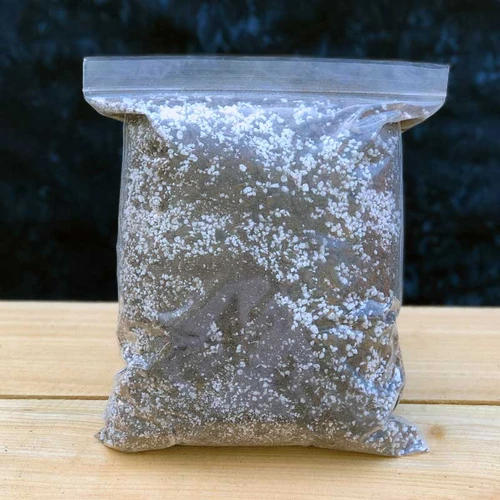
![Soil, Peat/Perlite Mix [Gallon Bag]](https://cdn11.bigcommerce.com/s-4kt71d4v98/images/stencil/500x500/products/120/2084/Soil-60__12201.1664306082.jpg?c=1 "Soil, Peat/Perlite Mix [Gallon Bag]")


![Soil, Tropical Pitcher Plant Mix [Gallon Bag]](https://cdn11.bigcommerce.com/s-4kt71d4v98/images/stencil/500x500/products/121/3209/Soil-2__11156.1776819725.jpg?c=1 "Soil, Tropical Pitcher Plant Mix [Gallon Bag]")