Q/A #157 - Rescuing a Nepenthes with Yellow Leaves
- January 24, 2025
VIDEO TRANSCRIPT
Jacob here with Sarracenia Northwest. Over the years, we’ve answered thousands of questions from carnivorous plant growers and have seen plants grown in many different situations. Here’s a question from the archives submitted in January 2022.
“I have had a Nepenthes Alata as a windowsill plant since March. A month ago, new growth stopped, and the leaves turned yellow and black. Is this due to disease, root rot, or lower winter light levels and temperatures?
"My soil medium is dried sphagnum moss. This is what the plant initially came in, and I just added more around the original root ball when I transplanted it to a larger pot in July. I use distilled water and the over-top method to water the plant, and I do not let the plant sit in a container of water. My windowsill faces east and is the sunniest in my house. I live in Winnipeg, Canada, in zone 3. I appreciate any assistance, thanks.”
The grower also submitted a few photos, and we can see that the lower leaves are turning yellow. One leaf is entirely yellow. Other leaves have yellow edges. The upper leaves are bright green. The plant also doesn’t have any pitchers.
In a previous video, I talked about how low lighting can prevent Nepenthes from producing pitchers. That plant also happened to be Nepenthes Deroose Alata. If you haven’t watched it, you can find the link in the description below.
In this particular case, the grower’s plant appears to be getting sufficient sunlight based on the color of the upper leaves. However, something is clearly amiss with this plant. It’s normal for an older leaf on a Nepenthes to die off. We see that happen to our plants. That’s just part of the lifecycle of a leaf.
But, when a bunch of lower leaves turn yellow, that’s a clue that something is going wrong. It could be nutritional deficiency, wrong soil mix, underwatering, being too cold, being too hot, too much sun, not enough sun. Many reasons! But, there was something that caught my attention.
He said he was using sphagnum moss as his growing medium. When I zoomed in on a photo, the moss appeared to be sufficiently hydrated and perhaps too hydrated.
We recommend using a mix of equal parts sphagnum moss and perlite for growing Nepenthes. The grower is using only sphagnum moss without any perlite. Perlite is an essential ingredient because it improves drainage and aeration. If you use only sphagnum moss, the media can compact over time, decreasing aeration and drainage.
Nepenthes roots don’t like to be in heavy, saturated media like tropical sundews. Instead, they prefer a very light and airy media. If the media is waterlogged or too wet, the roots will rot and die off, which likely happened to his plant. When the roots die off, any remaining roots can’t absorb enough water to sustain new growth, even though the media is sufficiently moist. Even the upper leaves have the appearance of not being sufficiently hydrated. The leaf surface appears dull, and the edges are curling under, even though the plant is getting sufficient sunlight.
Water is necessary for photosynthesis, which is how plants get their energy. If not enough water reaches the leaves, either from underwatering or poor root health due to using the wrong soil mix, the plant will shut down photosynthesis in the lower leaves, which is why they turn yellow. The plant will also shut down pitcher production, which is why his plant doesn’t have any pitchers. And the plant does this to conserve water.
Healthy roots are essential to a plant’s overall health, and it all starts with proper soil aeration. There are two ways the grower can remedy this situation. The first is to transfer the entire mass of sphagnum moss into a netted pot. A netted pot is often used to grow orchids or plants that don’t constantly require wet media. Some Nepenthes growers use these pots, but they are best for a greenhouse where you can hose down your plants. But, because the grower is using only sphagnum moss, a netted pot is an appropriate choice. It will improve evaporation and aeration. He just needs to let the moss dry out a bit before he waters again.
The other option is to repot the plant to a mix of equal parts sphagnum moss and perlite, our preferred media for Nepenthes. Sphagnum moss will retain water, and perlite will allow air to reach the roots to maintain their health. So, the key to healthy Nepenthes roots is to use sufficient perlite and allow the water to drain completely.
Regardless of what he does, it’s a long road to recovery. I’ve seen many plants like this to know that, even after heroic measures, the plant will look lanky and unsightly for the next six to twelve months. It’ll look like a Charlie Brown Nepenthes. Any new growth will also be much smaller until the plant can produce more roots again. The plant may produce a new shoot near the base. If it does, the grower will just need to wait for the basal shoot to get large enough before cutting off the larger vine. However, only time will tell.
If you need help with your Nepenthes or any other carnivorous plant, we’re here for you. Visit us at growcarnivorousplants.com, and look for Ask the Growers link to submit your question. We have lots of care guides and videos to get you on the right track. And while you’re on our website, check out the inventory of carnivorous plants. Our inventory changes monthly and seasonally, so make sure to sign up for our monthly newsletter. Thank you so much for watching. I look forward to seeing you in another video.
• The original question and response have been edited for publication.
• Click on a hashtag below or use the site's search function to view similar topics.
• To submit a carnivorous plant question, visit Ask the Growers.


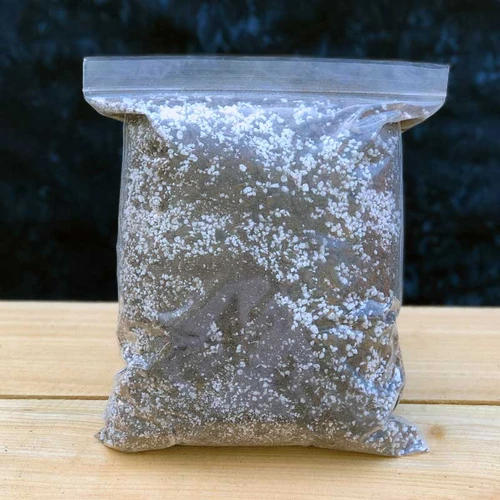
![Soil, Peat/Perlite Mix [Gallon Bag]](https://cdn11.bigcommerce.com/s-4kt71d4v98/images/stencil/500x500/products/120/2084/Soil-60__12201.1664306082.jpg?c=1 "Soil, Peat/Perlite Mix [Gallon Bag]")



![Soil, Tropical Pitcher Plant Mix [Gallon Bag]](https://cdn11.bigcommerce.com/s-4kt71d4v98/images/stencil/500x500/products/121/3209/Soil-2__11156.1776819725.jpg?c=1 "Soil, Tropical Pitcher Plant Mix [Gallon Bag]")