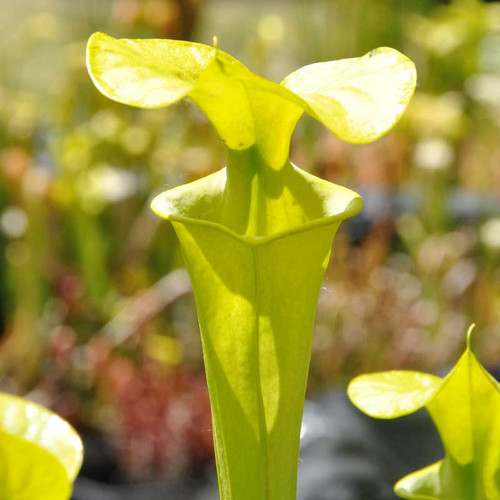


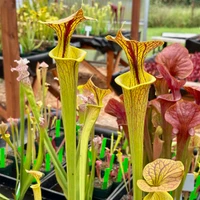


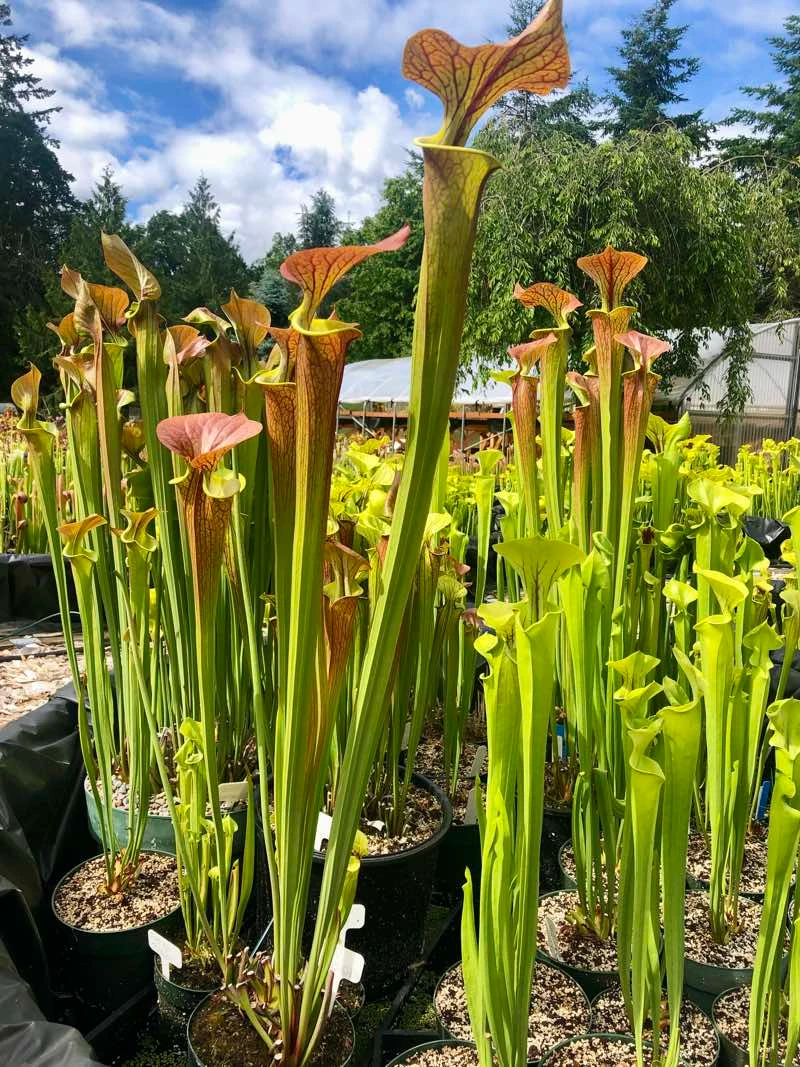
The common form of S. flava cuprea, commonly called copper top, typically grows to 2 feet tall. However, this giant form, when fully mature, gets up to 3 feet tall in our climate in Oregon. Some growers in warmer climates with a longer growing season have recorded 44 inches. Regardless, it will take time to witness these impressive heights. After division, expect about 3 to 4 growing seasons for the rhizome to bulk up. A very large pot will also encourage rhizome growth.
Overall, this plant is very impressive in person because it simply towers over others. Our stock mother plants originated from fellow carnivorous plant grower Wes Buckner.
GENERAL CARE
Type of Plant: Outdoor perennial for container growing.
Height: Up to 48 inches.
Sunlight: Full sun during the growing season.
Water: Low-mineral water (50 ppm or less).
Soil: Equal parts peat moss and perlite only.
Winter: Dormant. Minimal protection in USDA zones 7-9. Mulch in colder regions.
PLANT YOU RECEIVE
• Mature division from select mother plants.
• Shipped potted in a 4-inch pot.
• Care instructions and our 30-day guarantee are included.
ABOUT MATURE DIVISIONS
After we divide our mother plants, we allow the rhizomes to mature for at least one full growing season, sometimes two, before including them in our inventory. You get a much more vigorous and robust plant than one that has been recently divided.
SEASONAL APPEARANCE
January-March: Plant is dormant with no pitchers.
April: Spring growth will appear by the end of the month.
May: Fully developed pitchers will start to appear.
June: Full display of pitchers. This plant will look its best!
July-August: Plant will slow down when it’s hot. Some minor spotting.
September-October: Dormancy begins. Fewer pitchers. No new growth until spring.
November-December: Plant is dormant. Browned pitchers are cut off.