How to Grow Sarracenia

No terrariums.  No myths.  No nonsense.
Practical advice based on decades of growing and propagating carnivorous plants.

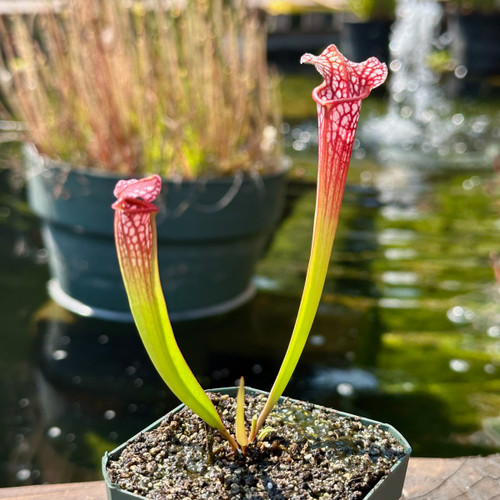
Grow Sarracenia, North American Pitcher Plant

Sarracenia Care at a Glance

Growing Requirement Our Recommendation
Where to Grow Outdoors year-round, where plants can experience natural seasonal changes in temperature and day length.
Sunlight Full sun with 6 or more hours of direct sunlight each day. A minimum of 4 hours is acceptable if the plant receives bright light for the rest of the day.
Water Use rainwater, distilled water, reverse-osmosis water, or tap water below 50 ppm. Keep the soil wet during the growing season.
Soil Use 1 part sphagnum peat moss to 1 part perlite. Do not use conventional potting soil, compost, or fertilizer.
Repotting Repot every few years, preferably in late winter or early spring before vigorous new growth begins.
Winter Dormancy Required each winter. Keep the soil moist and provide additional protection during prolonged or severe freezes when necessary.

Grower's Key Point

Sarracenia are outdoor plants. Give them abundant direct sunlight during the growing season and allow them to experience the natural seasonal changes that trigger winter dormancy.

Want a printable quick reference?
Download our one-page Sarracenia Care Guide (PDF)


Where does Sarracenia grow naturally?

Sarracenia, the North American pitcher plants, are native to open wetlands throughout much of eastern North America. Most species are concentrated in the southeastern United States, particularly along the Gulf and Atlantic coastal plains, where they grow in sunny bogs, seepage wetlands, and wet savannas. One species, Sarracenia purpurea, extends much farther north, ranging across the northeastern United States and much of Canada, with isolated populations reaching as far west as British Columbia and Alaska.

In their natural habitats, Sarracenia grow in wet, nutrient-poor soils with very little protection from the sun. Many of the southern bogs and savannas they inhabit are naturally maintained by periodic fire, which prevents shrubs and trees from overtaking the open wetlands. These conditions are the key to understanding how to grow Sarracenia successfully in cultivation.

Should I grow Sarracenia indoors or outdoors?

Sarracenia grow best outdoors in full sun, where they can experience the natural changes in temperature and day length throughout the seasons. A sunny deck, patio, balcony, or other open location is ideal. They are not good candidates for terrariums or year-round indoor growing.

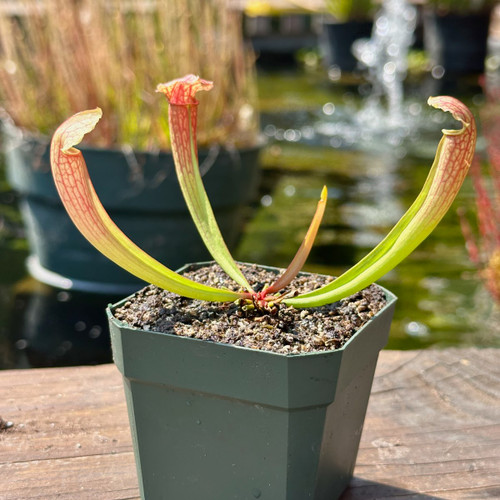
Keep your plants in containers rather than planting them directly into ordinary garden soil. Pots can also be placed along the edge of a pond or water garden, provided the crown of the plant remains above the waterline.

How Much Sunlight Do Sarracenia Need?

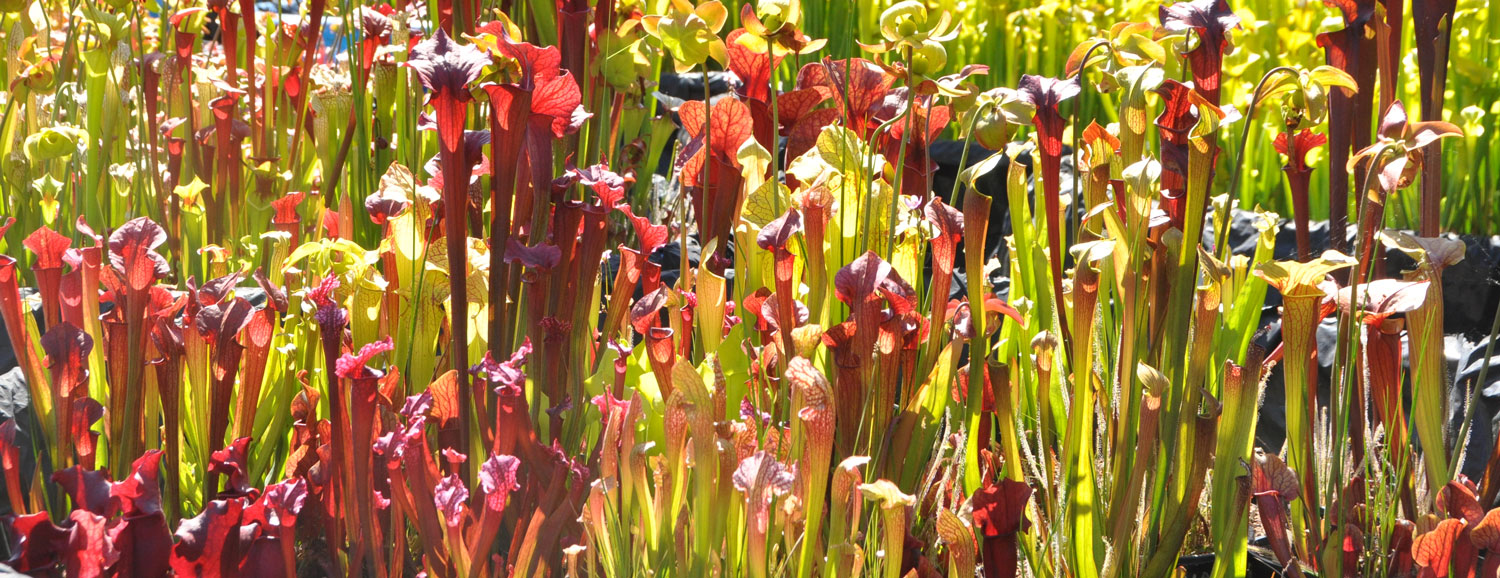
Sarracenia require abundant sunlight to grow vigorous pitchers and develop their best coloration. During the growing season, provide 6 or more hours of direct sunlight each day. Plants grown in full sun generally produce stronger growth and more intensely colored pitchers. A useful rule of thumb is to treat Sarracenia much like a tomato plant when choosing a location: If a spot receives enough sunlight to grow tomatoes successfully, it should receive enough sunlight to grow Sarracenia well.

If full sun is not possible, provide a minimum of 4 hours of direct sunlight, with bright light for the remainder of the day. Plants grown with less direct sun may remain healthy, but their pitchers will often be less robust and less colorful.

What Kind of Water Should I Use?

Sarracenia require water that is low in dissolved minerals. Rainwater, distilled water, and reverse-osmosis water are all excellent choices. Tap water may also be used if it contains less than 50 parts per million (ppm) of dissolved minerals. Avoid prolonged use of hard or mineral-rich water, which can cause minerals to accumulate in the soil.

Keep the soil wet throughout the growing season. The easiest method is to place the pot in a shallow tray of water and allow the plant to absorb water from below. The water level can fluctuate naturally, but should generally remain no more than halfway up the pot.

What Soil Should I Use, and When Should I Repot?

Sarracenia require an acidic, nutrient-poor soil. Use a mixture of 1 part sphagnum peat moss and 1 part perlite. Do not use conventional potting soil, compost, or soil containing added fertilizer, as these materials contain nutrients and minerals that can damage the roots.

Repot your Sarracenia every few years, or when the plant has outgrown its container. Late winter to early spring, just before new growth begins, is the best time to repot or divide established plants. Choose a pot with drainage holes that provides enough room for the rhizome to continue growing.

Don't want to mix your own?
Our blend is ideal for Sarracenia, Venus flytraps, and hardy sundews.

Do Sarracenia Need Winter Dormancy?

Sarracenia are temperate perennials and require a winter dormancy each year. As temperatures cool and days shorten in fall, growth will slow and many pitchers will gradually turn brown. This is a normal part of the plant's seasonal growth cycle.

During dormancy, keep your Sarracenia outdoors whenever your climate permits. The plants tolerate frost and freezing temperatures, and the soil may freeze during cold weather. Keep the soil moist throughout winter, but it does not need to remain as wet as during the growing season.

Container-grown plants may require protection during prolonged or severe freezes. The primary concern is not simply freezing, but dehydration from cold, drying winds and repeated cycles of freezing and thawing. The amount of protection needed will depend on your winter climate.

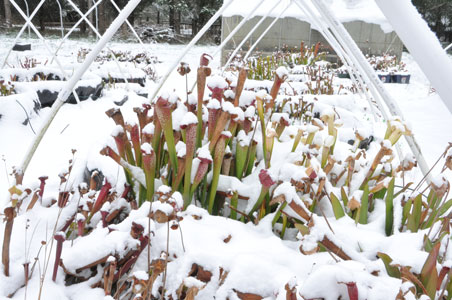
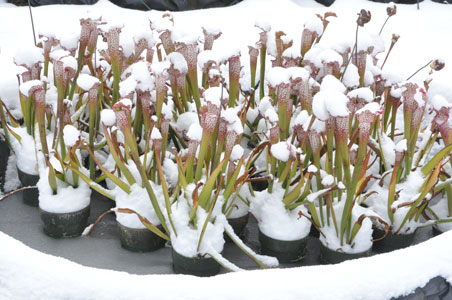
Our nursery is in USDA zone 8. We experience temperatures as low as 10°F (-12°C).
It is not at all unusual for these plants to experience snow and ice.

Seasonal Care

Growing Sarracenia through the seasons? Our Monthly Care Guide explain what to expect throughout the year, from spring growth and summer care to fall preparation and winter dormancy.

Sarracenia Troubleshooting

My Sarracenia isn't producing strong, colorful pitchers.

Insufficient sunlight is one of the first things to investigate. Sarracenia grown with inadequate direct sunlight often produce weak growth with poor coloration. Make sure your plant receives at least 4 hours of direct sunlight each day, preferably 6 or more.

See a real example: Sarracenia Not Growing Well in a Terrarium →

New pitchers are twisted or deformed.

Inspect the developing growth carefully for pests. Aphids and thrips can feed on immature leaves and cause pitchers to emerge twisted, curled, or otherwise malformed. Because the damage often occurs while the pitcher is still developing, the pests may be difficult to notice at first.

Learn how to diagnose it: Deformed Pitchers on a Sarracenia →

My pitchers are turning brown.

Individual pitchers naturally age and die, and increased browning is normal as Sarracenia enter winter dormancy. Browning during the growing season should be evaluated in the context of the plant's sunlight, water quality, pests, and the age of the affected pitchers.

See a related question: Sarracenia Are Turning Brown →


Ready to grow a Sarracenia?

• Shipped potted with a 30-Day Guarantee.
• Inventory changes monthly and seasonally.
Browse our current Sarracenia inventory.

Your cart is empty

Most Popular