Q/A #76 - Pinguicula and Sundew Are Looking Sad.
- April 27, 2023
A carnivorous plant can sometimes look unhealthy even when it is growing normally. Tropical Pinguicula may become smaller as they transition between seasonal growth forms, while older sundew leaves naturally lose their dew before dying back.
Why Does My Pinguicula Look Small and Unhealthy?
Question:
We have a Pinguicula ‘Alfred Lau’ that we purchased a while ago. It was in great condition, but now it looks really sad.
The plant is sitting on an elevated area of soil in its pot. The pot sits above a tray of distilled water and is grown under T5 lights for approximately 12 hours per day. We place the pot in water daily or every other day depending on how wet the soil feels.
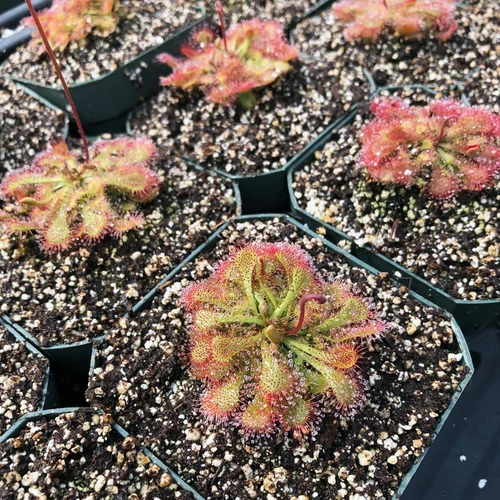
I also have a Drosera venusta. Its lower leaves look dull and no longer have dew. I know older leaves eventually die, but the plant just doesn't seem to be thriving.
Submitted April 2021.
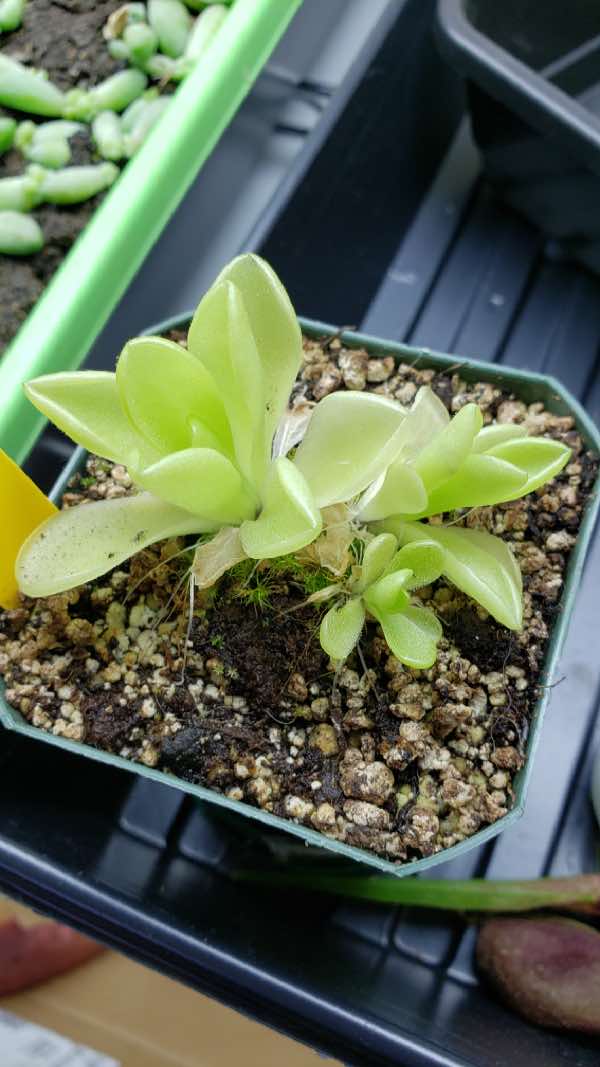
Pinguicula ‘Alfred Lau’
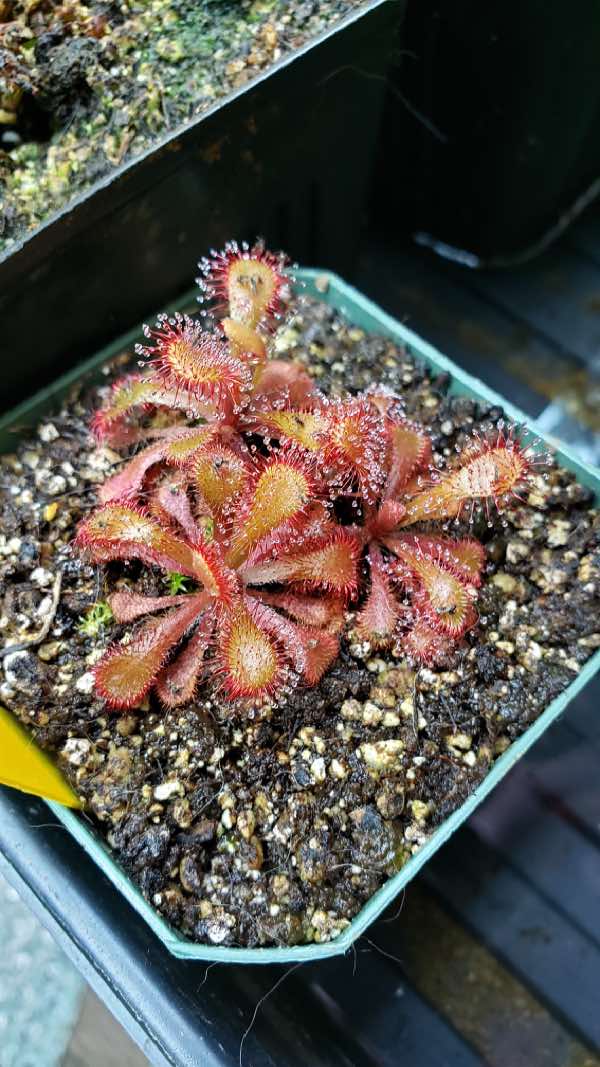
Drosera venusta
Is the Pinguicula Dying?
Response by Jeff Dallas:
The Pinguicula looks healthy. It appears to be transitioning out of its winter succulent growth and beginning its spring growth.
Many tropical Pinguicula, especially Mexican species and hybrids, produce smaller, thicker leaves during part of the year. As conditions change, they begin producing their larger carnivorous leaves again.
The plant may look unusually exposed because the older dead leaves have been removed. That is normal. Pinguicula have very short leaves, so cleaning away old foliage can reveal more of the lower portion of the plant than growers are accustomed to seeing.
What Are the Small Plants Around the Pinguicula?
The smaller rosettes around the main plant are offsets produced by the parent plant.
They can be left together to form a cluster or carefully separated and planted into their own pots. As they grow, each offset will develop its own rosette of leaves.
Why Is My Sundew Losing Its Dew?
Older sundew leaves naturally lose their dew as they age. Eventually those leaves will turn brown and die while new leaves continue emerging from the center of the plant.
Do not judge the health of a sundew primarily by its oldest leaves. Instead, look closely at the newest growth.
If the new leaves emerging from the center are colorful, properly formed, and producing dew, the plant is generally growing well.
How Can I Tell Seasonal Growth From a Real Problem?
A tropical Pinguicula producing a compact rosette of firm, healthy succulent leaves is usually following its normal seasonal growth cycle. As conditions change, it may begin producing larger carnivorous leaves again.
Be more concerned if the center of the rosette becomes soft, dark, or progressively deteriorates, or if new growth stops completely while the plant continues to decline.
• For complete growing instructions, see our How to Grow Tropical Butterworts (Pinguicula) care guide.
The original question and response have been edited and expanded for clarity.


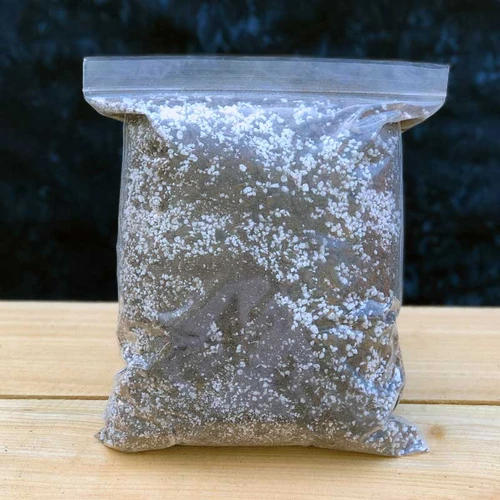
![Soil, Peat/Perlite Mix [Gallon Bag]](https://cdn11.bigcommerce.com/s-4kt71d4v98/images/stencil/500x500/products/120/2084/Soil-60__12201.1664306082.jpg?c=1 "Soil, Peat/Perlite Mix [Gallon Bag]")



![Soil, Tropical Pitcher Plant Mix [Gallon Bag]](https://cdn11.bigcommerce.com/s-4kt71d4v98/images/stencil/500x500/products/121/3209/Soil-2__11156.1776819725.jpg?c=1 "Soil, Tropical Pitcher Plant Mix [Gallon Bag]")